
Women Making Space
Women have long been part of space exploration, yet their work has often gone unrecognised. This is the story of those who helped build the industry – and those now pushing against its barriers.
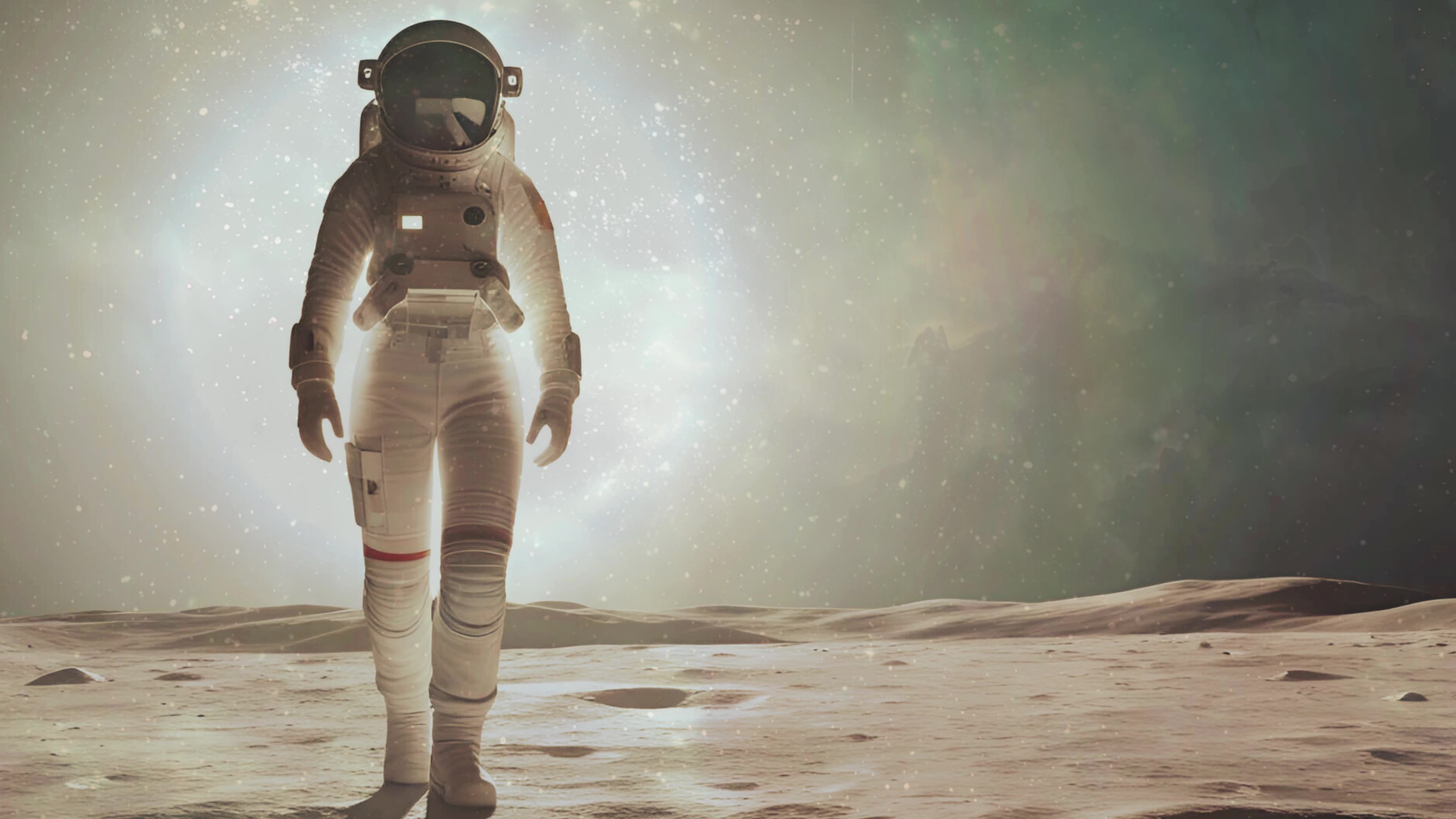

At four years old, Farah Al Fulfulee would climb up to the rooftop each night, gazing at the sky in quiet awe. The vastness above both unsettled and fascinated her – a silent, endless canvas that stirred more questions than answers. What were the stars? Why were they there? And what did they mean?
Noticing her growing passion, Al Fulfulee's father began bringing home books and magazines about space. It was through those pages that she first encountered NASA – and with it, the idea that exploring the cosmos wasn’t just a dream, but a real possibility. That spark became fuel. Years later, she would rank among the top 10 students in her engineering class.
Al Fulfulee didn’t attend her graduation party in a gown. She turned up in a space suit. For her, it wasn’t just a costume. It was a statement of intent, shaped by childhood dreams and a vision of life she hoped to lead.
But once the graduation photographs were tucked away, reality crept back in: her home country lacked a space agency, offered no formal routes for engineers, and left even fewer openings for women aspiring to build careers in aerospace.
Like many women drawn to the space sector, Al Fulfulee came to understand that academic achievement, however hard-earned, was merely the starting point – the first step in a long journey shaped by perseverance.
As Diversity, Equity and Inclusion (DEI) initiatives gain prominence across the space and STEM (science, technology, engineering and mathematics) sectors and with Blue Origin’s all-female crewed flight in April sparking both celebration and controversy, the conversation around women in space is shifting.
But beyond the headlines and high-profile launches, who are the women who have driven – and continue to influence– the future of space exploration and innovation?
From cutting-edge researchers to space shuttle pilots, seven women share their unique experiences and pathways into this exclusive sector and discuss what it's really like to succeed in an industry still overwhelmingly dominated by men.
Their journeys into the space industry haven’t always been linear. And yet, these women have challenged boundaries, shifted perceptions and continue to expand what’s possible – not just for themselves, but for every girl who’s ever looked up towards the sky and wondered, Could I go there too?
Women making history
Valentina Tereshkova made history in 1963 as the first woman to orbit Earth aboard Vostok 6. Her mission lasted just under three days (two days, 23 hours, and 12 minutes). With a single flight, she logged more flight time than all the US Mercury astronauts who had flown up to that point combined. Both Tereshkova and her fellow cosmonaut, Valery Bykovsky, were record-holders. Tereshkova’s mission marked a pivotal moment in the history of women in space– illuminating the path for future generations of female astronauts to pursue their own ambitions in space exploration.

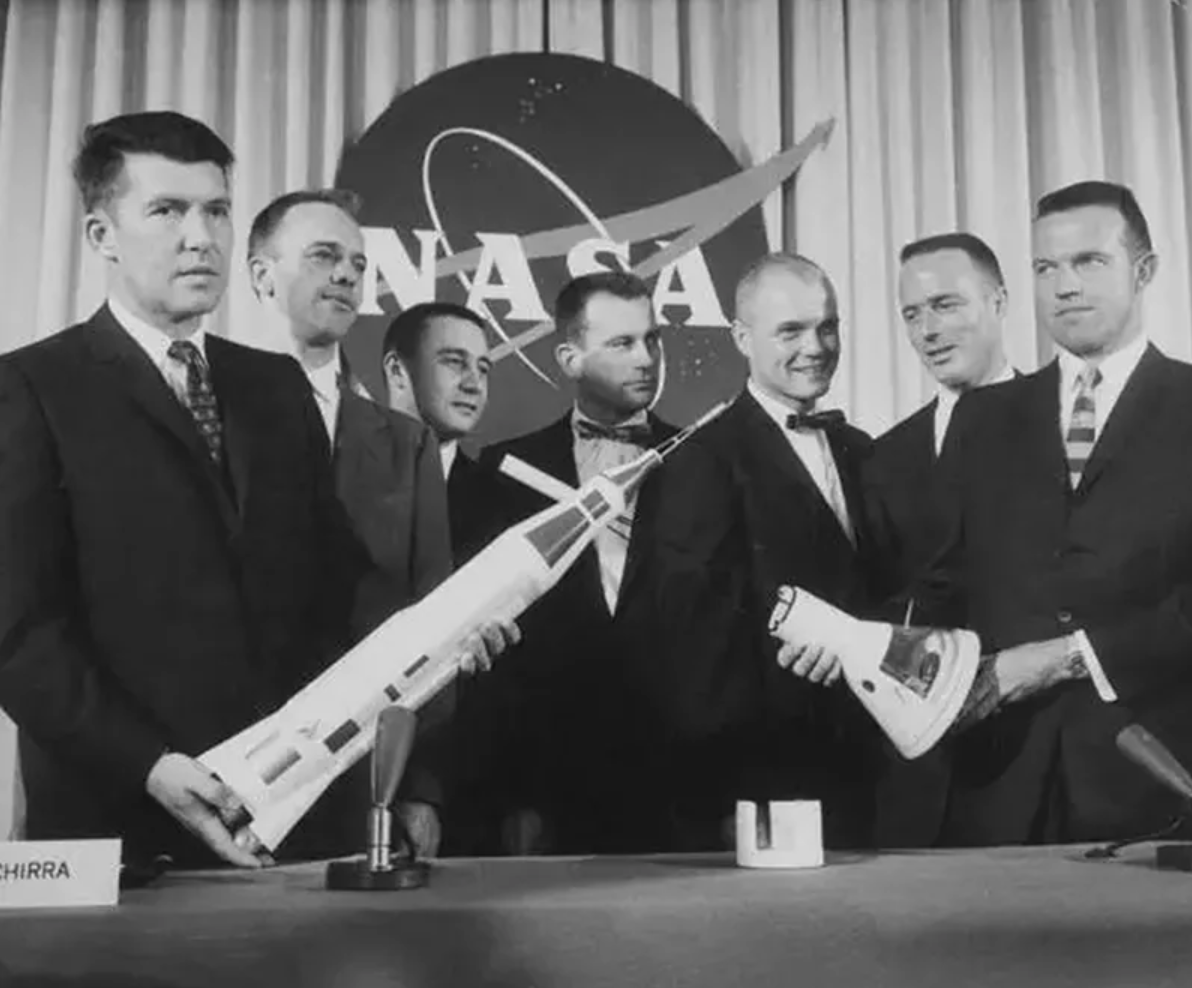
All boys’ club. The Mercury 7 laid the foundation for the Gemini and Apollo programmes. Several went on to fly in those missions. Photo: NASA
All boys’ club. The Mercury 7 laid the foundation for the Gemini and Apollo programmes. Several went on to fly in those missions. Photo: NASA
Stepping into the 'moon boots' of Tereshkova, NASA astronaut Sally Ride made history on June 18, 1983, becoming the first American woman in space. She launched alongside her four crew mates aboard the Space Shuttle Challenger on mission STS-7. Ride was a member of NASA Astronaut Group 8, the first American selection class to include women, chosen in 1978. Her journey to space was a significant milestone for women in space exploration as it spotlighted the advancements in gender inclusion within NASA.

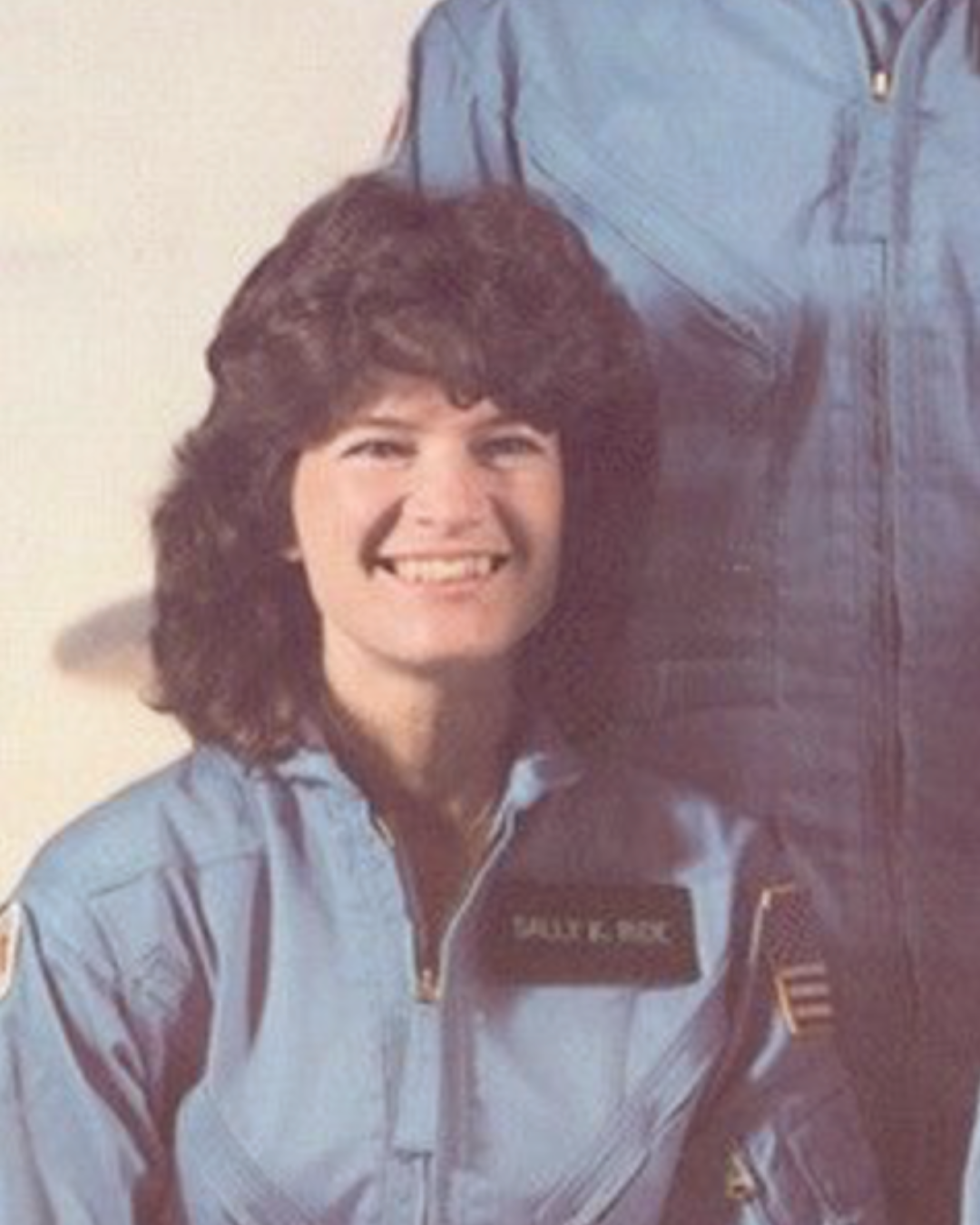
Sally Ride was honoured with numerous awards, including inductions into the National Women’s Hall of Fame. Photo: NASA
Sally Ride was honoured with numerous awards, including inductions into the National Women’s Hall of Fame. Photo: NASA
Before Mae Jemison, no Black woman had ever travelled to space – a stark reflection of the systemic barriers that defined NASA’s early astronaut program. In 1987, Jemison changed the space game, becoming the first African-American woman selected for astronaut training. A Stanford and Cornell graduate, she brought with her a background in engineering, medicine, and service in the Peace Corps. Jemison’s achievements opened new ground in the space industry – advancing racial diversity and redefining the boundaries of what was once thought possible.
On September 12, 1992, Jemison embarked on a groundbreaking mission aboard the Endeavour, STS-47, cementing her legacy in the annals of space exploration. Her efforts have since been celebrated with numerous awards and honorary doctorates, recognising her pioneering contributions and inspiring others –especially people of colour– to pursue careers in STEM and space.
Dr. Mae Jemison reflects on spaceflight and her mission to inspire future scientists
While the achievements of female astronauts are rightly celebrated for their contributions to space exploration, becoming an astronaut isn't the only aspiration within the field. Many women contribute significantly behind the scenes – working in a wide range of roles that are essential to the success of the space industry, including future missions.
Nancy Grace Roman is a prime example. She was instrumental in the creation of the Hubble Space Telescope and is famously referred to as the "Mother of Hubble,". The ambitious concept of a space-based telescope became a reality thanks to her visionary leadership and unwavering support for space-based astronomy. By giving humanity previously unheard-of vistas of far-off galaxies, nebulae, and other celestial phenomena, Roman's discoveries have completely transformed our understanding of the cosmos.
Nancy Grace Roman became a research astronomer and the first chief of astronomy at NASA. Audio: sourced from Youtube. Photo: NASA
Nancy Grace Roman became a research astronomer and the first chief of astronomy at NASA. Audio: sourced from Youtube. Photo: NASA
The triumphs of these women not only broke gender and racial barriers but also established important milestones in the history of space travel, providing a strong foundation for future generations of women entering the industry.
Despite the remarkable progress made over the years, gender imbalance remains a persistent issue in the sector. In fact, men continue to make up the majority of the global space workforce – a trend that has seen only slight improvements over the past three decades.

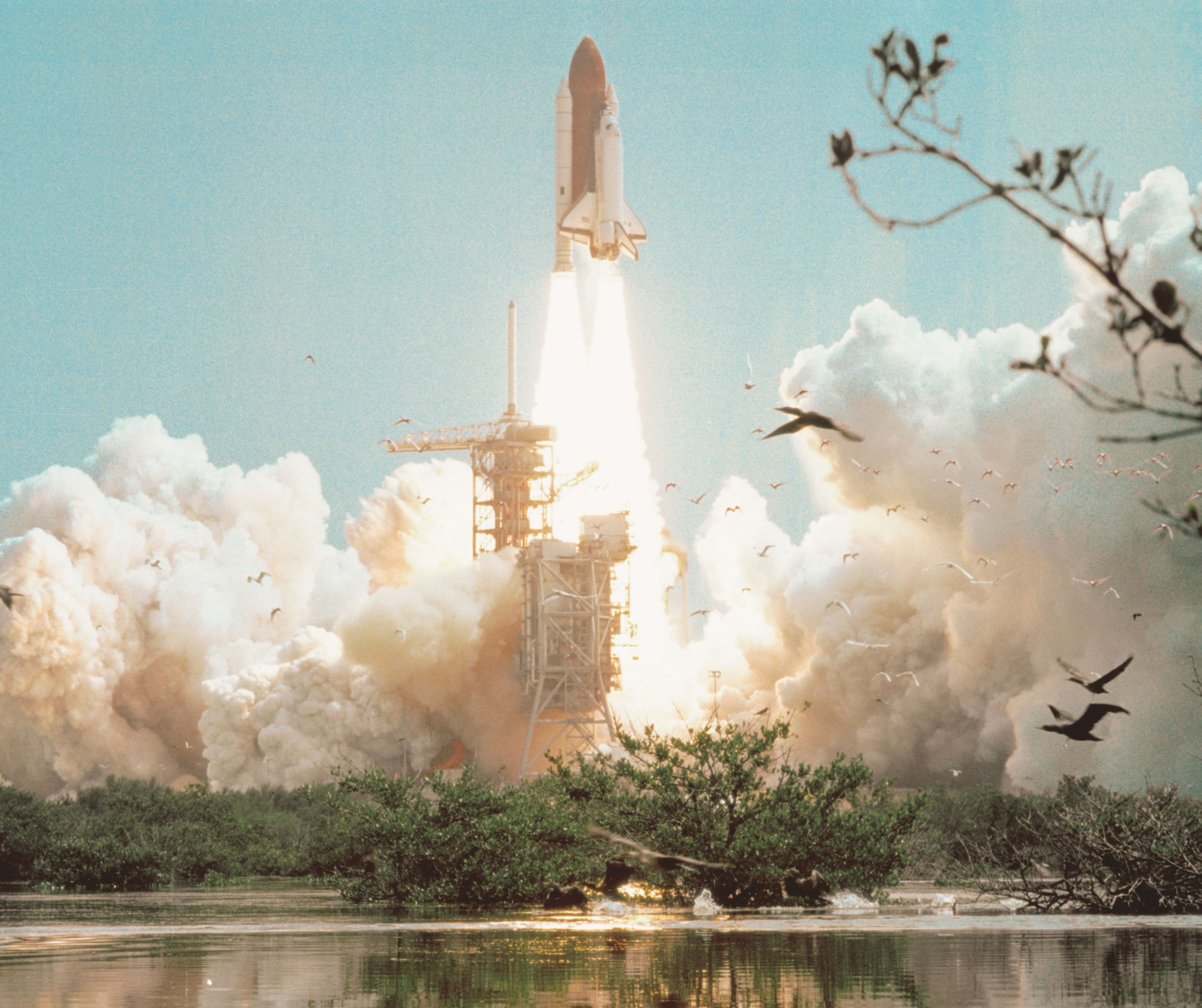
The Space Shuttle Columbia (STS-94) soaring from Launch Pad 39A. Photo: NASA
The Space Shuttle Columbia (STS-94) soaring from Launch Pad 39A. Photo: NASA
The Space Shuttle Columbia (STS-94) soaring from Launch Pad 39A. Photo: NASA
The Space Shuttle Columbia (STS-94) soaring from Launch Pad 39A. Photo: NASA
The Space Shuttle Columbia (STS-94) soaring from Launch Pad 39A. Photo: NASA
The Space Shuttle Columbia (STS-94) soaring from Launch Pad 39A. Photo: NASA
The Space Shuttle Columbia (STS-94) soaring from Launch Pad 39A. Photo: NASA
The Space Shuttle Columbia (STS-94) soaring from Launch Pad 39A. Photo: NASA
The Space Shuttle Columbia (STS-94) soaring from Launch Pad 39A. Photo: NASA
The Space Shuttle Columbia (STS-94) soaring from Launch Pad 39A. Photo: NASA
Only 11% of all individuals who have been to space are women
United Nations, Space for Women Report 2024

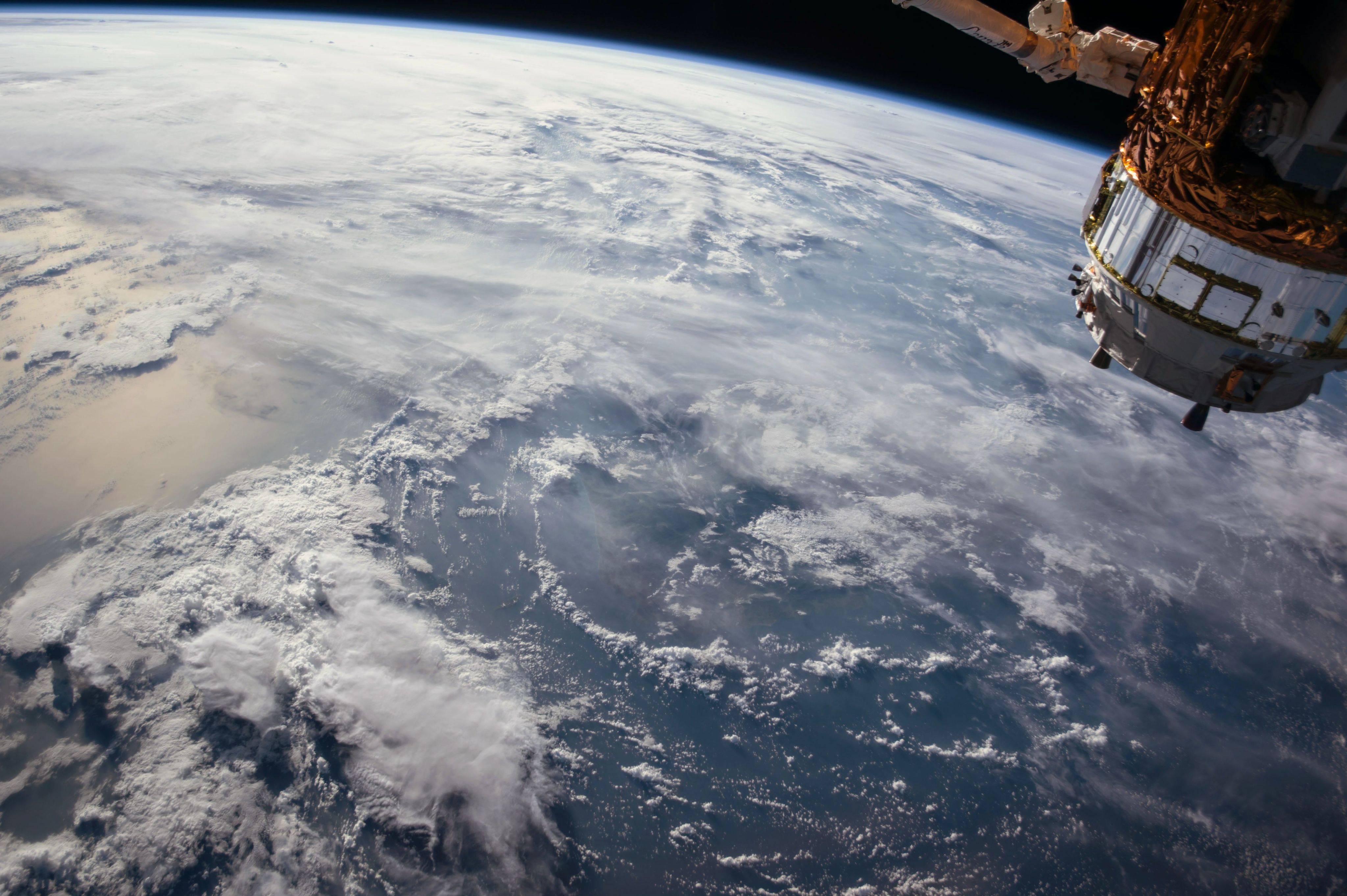
Not enough space?
Despite significant milestones, such as NASA's Artemis programme aiming to fly the first woman to the Moon by April 2026, women still make up only 11 per cent of the global astronaut corps and hold less than 20 per cent of all technical roles.
Gender inequality remains a pressing issue in both STEM education and the workforce – areas that are key pathways into space-related careers – and it impacts countries across all levels of development. According to recent studies, women continue to be significantly under-represented in STEM research globally, making up just 28.8 per cent of the roles on average.
As reported by The United Nations Office for Outer Space Affairs (UNOOSA) the amount of women actively working within the global space sector has remained at about 20 per cent for the last 30 years.
Simonetta Di Pippo, Director of UNOOSA, said: “Equality is the pre-condition for a better future.''
''Space for women means enhanced awareness, capacity, and skills, empowering young women and girls globally and promoting gender equality,” she added.
New data shared by the Space Skills Alliance highlighted a clear gender gap in job applications. For technical roles, only 17 per cent of applicants were women. However, in non-technical areas such as marketing and office management, the proportion of female applicants was roughly twice as high.
Given that many are offered clerical roles over technical roles, less women are given the opportunity to go to space. UNOOSA discovered that despite over 560 people having ventured to space, fewer than 70 of them have been women. And out of a total of 225 spacewalks, just 15 were performed by women.
In leadership roles, the statistics are equally as bleak for women. Latest figures show women hold just 19 per cent of CEO positions in the space and defence sectors – a figure that raises pressing questions.
Looking ahead, UNOOSA predicts that 90 per cent of future space-related careers will demand STEM skills. For women, this presents both an opportunity and a challenge. Gaining the necessary education and training is essential to remain competitive in the evolving job market – yet in a field already shaped by gender imbalance, it may represent yet another barrier to entry.
The United Nations stressed that achieving the 17 Sustainable Development Goals hinges on ensuring that the benefits of space are accessible to all women and girls – and that they are empowered to take on active, equal roles in space science, technology, innovation, and exploration. Without their full participation, the future of space risks being shaped by only half the world’s potential.

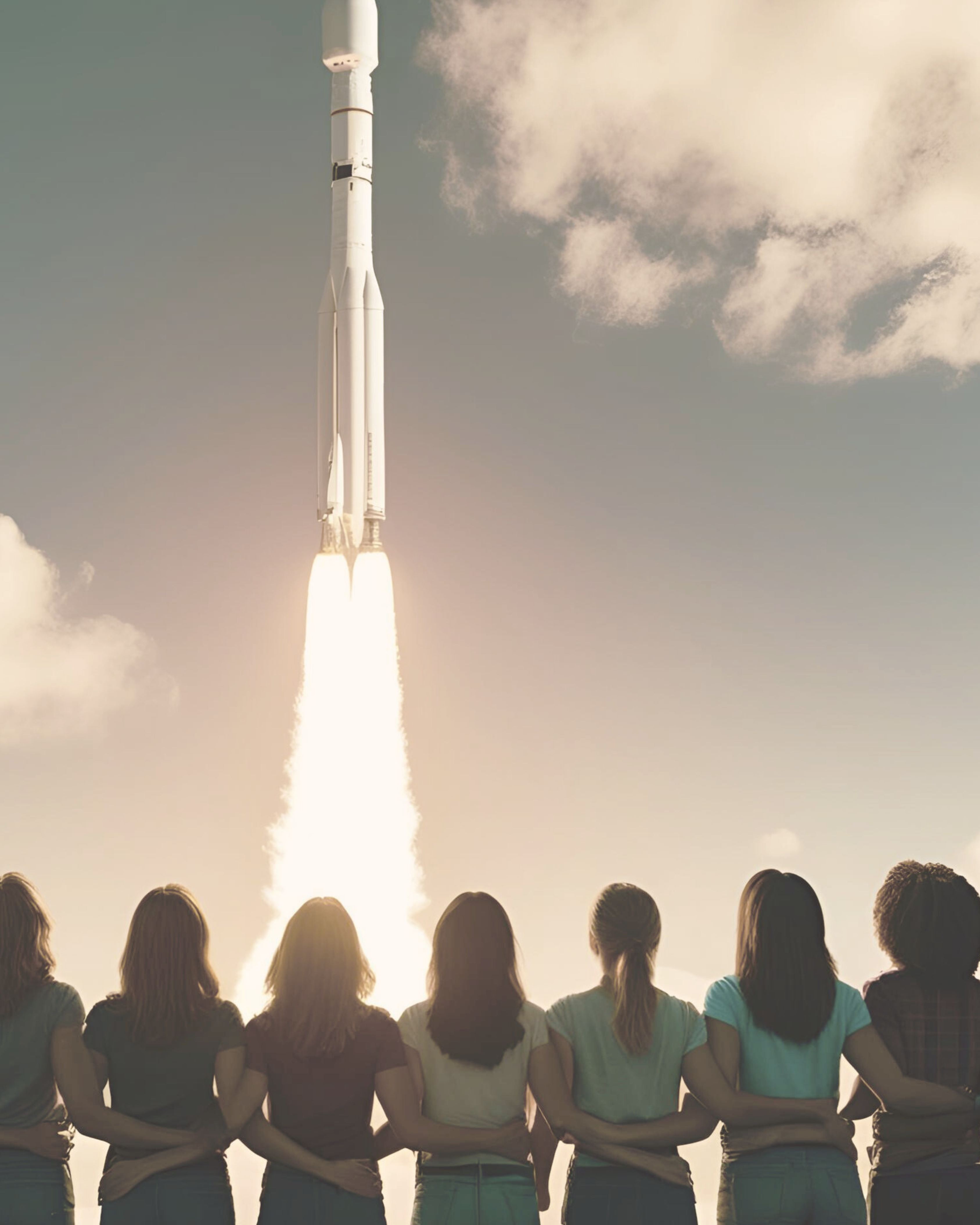

Women represent just 35% of all students enrolled in STEM-related higher education
United Nations, Space for Women Report 2024
Visionary or vanity?
Pop star Katy Perry made headlines on April 14, 2025, not because of her music, but because she was part of the first-ever all-female space trip with Blue Origin. Journalist Lauren Sánchez, broadcaster Gayle King, civil rights activist Amanda Nguyen, retired rocket scientist Aisha Bowe, and filmmaker Kerianne Flynn joined Perry on the New Shepard NS-31. With funding from Blue Origin's founder, Jeff Bezos, this initiative sought to inspire future generations and honour women's achievements in space exploration.
Replay: New Shepard Mission NS-31 Webcast
Blue Origin's all-female 'mission' received mixed reviews and was even referred to as 'PR fail' by some. Olivia Munn and Emily Ratajkowski, among other celebrities, were quick to deride the flight, citing its perceived extravagance in the midst of global crises as well as its impact on the environment. Perry also faced ridicule for her emotional post-flight reactions, which included kissing the ground and speaking openly about a profound connection to love.
Many viewed the star-studded spectacle as a disservice to the women who dedicated years to rigorous study and training within the space industry. As Moira Donegan wrote in The Guardian, ‘There are at least two women on the mission who can be credited as serious persons: Aisha Bowe, an aerospace engineer, and Amanda Nguyen, a civil rights entrepreneur whose past work with NASA makes her something closer to an actual astronaut’.
Whether hailed as progress or dismissed as spectacle, Blue Origin's mission has undeniably thrust women in space and STEM into the spotlight. Though spearheaded by Jeff Bezos – a sticking point for some feminists who feel it undermines the message of female empowerment – the launch has sparked vital conversations about gender, visibility, and who gets to belong in the cosmos. In a field still overwhelmingly male, even imperfect steps towards inclusion are not just necessary –they’re long overdue.

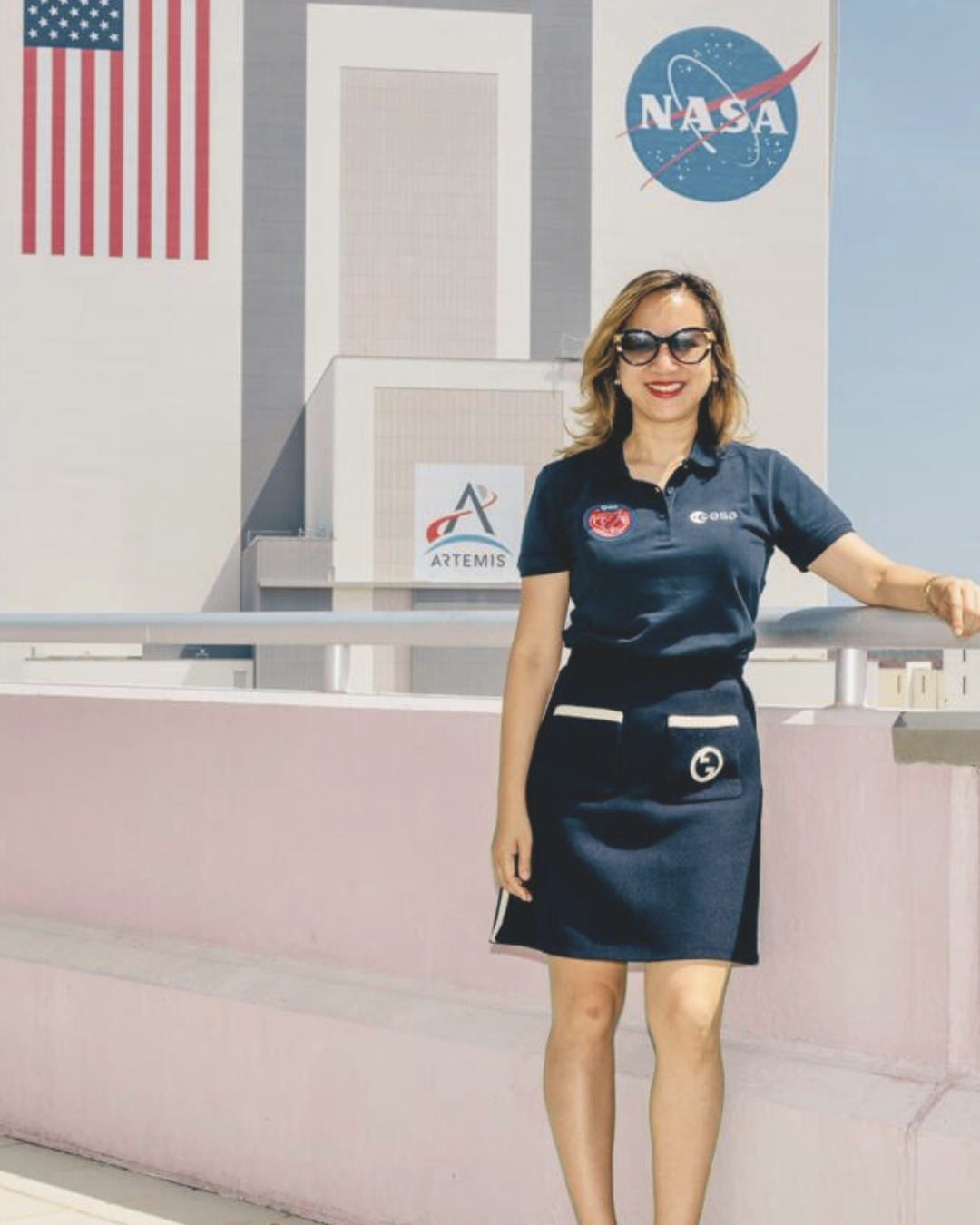
Laura Dao at Kennedy Space Center ready to attend the launch of the space telescope Euclid in 2023. Photo: Laura Dao
Laura Dao at Kennedy Space Center ready to attend the launch of the space telescope Euclid in 2023. Photo: Laura Dao
Laura Dao at Kennedy Space Center ready to attend the launch of the space telescope Euclid in 2023. Photo: Laura Dao
Laura Dao at Kennedy Space Center ready to attend the launch of the space telescope Euclid in 2023. Photo: Laura Dao
Laura Dao at Kennedy Space Center ready to attend the launch of the space telescope Euclid in 2023. Photo: Laura Dao
Laura Dao at Kennedy Space Center ready to attend the launch of the space telescope Euclid in 2023. Photo: Laura Dao
'It was quite a surprise when I finally ended up the space sector'
Laura Dao
Dao never set out to join the space industry. Yet, sixteen years on, she finds herself at the helm as the Head of Protocol for the European Space Agency (ESA).
She reflected: ''I didn’t have a career plan. I chose maths and science in high school to align with my parents’ hopes of me becoming a doctor, but my heart was always with the arts and literature.
''I switched paths at university, interned in fashion, worked in a bank, spent time at an embassy – then, out of nowhere, came this opportunity in space.''
For Dao, a native French speaker, finding her footing at the ESA was a pleasant surprise. She was delighted to work alongside colleagues from various nationalities.
''When I started to work at the European Space Agency, I found it interesting that there were people from all nationalities, from different backgrounds, and most of the time, they were very passionate about their job.''
"It was the atmosphere that really made me feel at ease," she added.
The European Space Agency (ESA) describes itself as ''Europe’s gateway to space.'' Its mission is to shape the development of Europe’s space capabilities, ensuring that investment in space continues to deliver benefits for citizens across Europe and beyond.
In her role, Dao and her colleagues perform essential tasks that support ESA’s broader missions, highlighting the importance of non-technical personnel in the success of space exploration.
Although based in Paris, Dao often travels the world to organise ESA’s space launches. She currently works in the Director General’s Cabinet, overseeing guest operations and coordinating launch events.
She explains that there are always “last-minute changes”, which brings a level of “working under pressure”. There is no such thing as a 'typical' workday, and she has learnt to always be prepared for the unexpected. She explained: “I plan the launches that take place over the years, based on input from different directorates – science, human and robotic exploration, and observation navigation.
''We have mission schedules over the years but the date of the launch can always move for technical reasons,'' She added.
In Dao’s role, forward planning is crucial. Each launch follows its own timeline, shaped by the mission’s objectives. But when astronauts are on board, the stakes rise dramatically – every detail must be flawlessly executed to safeguard lives and ensure the mission’s success.
We usually begin preparations around two months in advance for something like a satellite or scientific instrument,” she explained. “But we only move into full planning mode once the launch date is more certain. There’s little point in finalising details when the timeline is still unclear.''
Over her time in the space industry, Dao has seen meaningful progress in DEI initiatives. She observed a growing awareness and a stronger commitment at ESA to building a workforce that better reflects the diversity of society.
“We [ESA] have a service dedicated to things like this [DEI]. It’s not just focused on women but other aspects including younger people, LGBTQ and those with disabilities,” she said.
ESA has made notable strides in improving gender balance, though persistent challenges remain. In the past five years, the proportion of female staff has risen to 29 per cent. And while women held just 17 per cent of top management roles in 2021, that figure marks a significant rise from only eight per cent in 2016.
Dao acknowledged that the space sector is often seen as a “technical and scientific world” traditionally dominated by men, as well as a “political” arena where male representation remains strong.
At ESA headquarters, Dao works within the organisation’s services division, which encompasses areas such as communication, strategy, legal affairs, and administration. Though distinct from engineering and scientific roles, these positions demand a high level of technical expertise and play a vital role in shaping the agency’s operations and long-term vision.
She noted that while women are well represented in engineering roles in countries such as the Netherlands, Italy and Germany, they remain underrepresented in senior leadership positions across the sector.
''Your job is not just doing what you do, it's also being resilient''
Dao pointed out that while engineers, scientists and life sciences PhD holders are often celebrated for their achievements, those working in areas such as strategy, communication or administration rarely receive the same level of recognition, despite their essential contributions to the space industry. This disparity, she suggested, reinforces the need for women to have confidence in forging their own paths – and to resist the pressure to conform to narrow definitions of success within the sector.
Lara Dao on women finding their place in the space sector.
Having taken a less conventional route into the industry, Dao is passionate about encouraging more young women to consider careers in the industry. She stresses the importance of engaging girls early – helping them see that a future in space is not only possible, but accessible – and that success doesn’t necessarily require a background in mathematics or a rigid STEM pathway.
Laura Dao on the importance of encouragement early on.
'I am a middle eastern girl who had a dream to reach for the stars'
Farah Al Fulfulee
Al Fulfulee's dream began to take shape when she was accepted into the University of Baghdad’s College of Engineering, in the Electronics and Communication department – an achievement she described as “a big accomplishment”, given the university’s competitive, grades-only admissions process.
She later graduated among the top ten students in her class. At her graduation party, she embraced the theme of “dress as what you want to be in the future” by arriving in a spacewalking (EVA) suit – a bold, symbolic gesture of her ambition to one day become an astronaut.
But after graduation, Al Fulfulee was confronted with a sobering reality: Iraq had no space agency, and no clear path for engineers wanting to work in the space sector.
Women from the Middle East remain vastly underrepresented in the space industry, with the International Civil Aviation Organisation (ICAO) reporting that they account for just five per cent of aviation professionals across the region.
The World Economic Forum’s Global Gender Gap Report 2024 found that, despite growing international momentum towards gender equality, women in the Middle East continue to face entrenched obstacles in science, technology, engineering and mathematics (STEM). Including restricted access to specialised education, a lack of visible female role models, and enduring cultural and institutional biases. While some progress is being made, it remains slow – the gender gap remains.
''Being a girl in the Middle East was challenging as resources almost did not exist for me''
While working in a non-engineering role, Al Fulfulee began looking for other ways to pursue her career goals. That search eventually led her to Oklahoma, in the United States – a move that reignited her passion and brought her closer to the world she had long dreamed of.
In the US, her lifelong mission to the cosmos began to feel tangible. She often made trips to NASA’s Johnson Space Center in Houston, immersing herself in the environment she had once only read about in books.
‘’I won't quit until I wear the blue suit''
However, being from the Middle East and having no prior engineering experience, Al Fulfulee's pursuit of a space career was proving to be more challenging than she had anticipated.
“My degree wasn’t from the US, which made things more difficult. Despite having a high GPA, it wasn’t considered ideal as it’s harder to get it verified,” she explained.
But there was a celestial silver lining for Al Fulfulee. After seven years working in quality assurance and improving her English language and leadership skills, she was finally offered her first big break as an engineer at Boeing in Oklahoma.
Her success continued to grow when she was later assigned the role of System Engineer III for the ISS program. Alongside her work, she is enrolled in a Master's Degree Program in Space Operations with hopes of eventually fulfilling her childhood dream of going to space.
She said: ''I know my path is long and across the continents, but I am enjoying my journey.’’


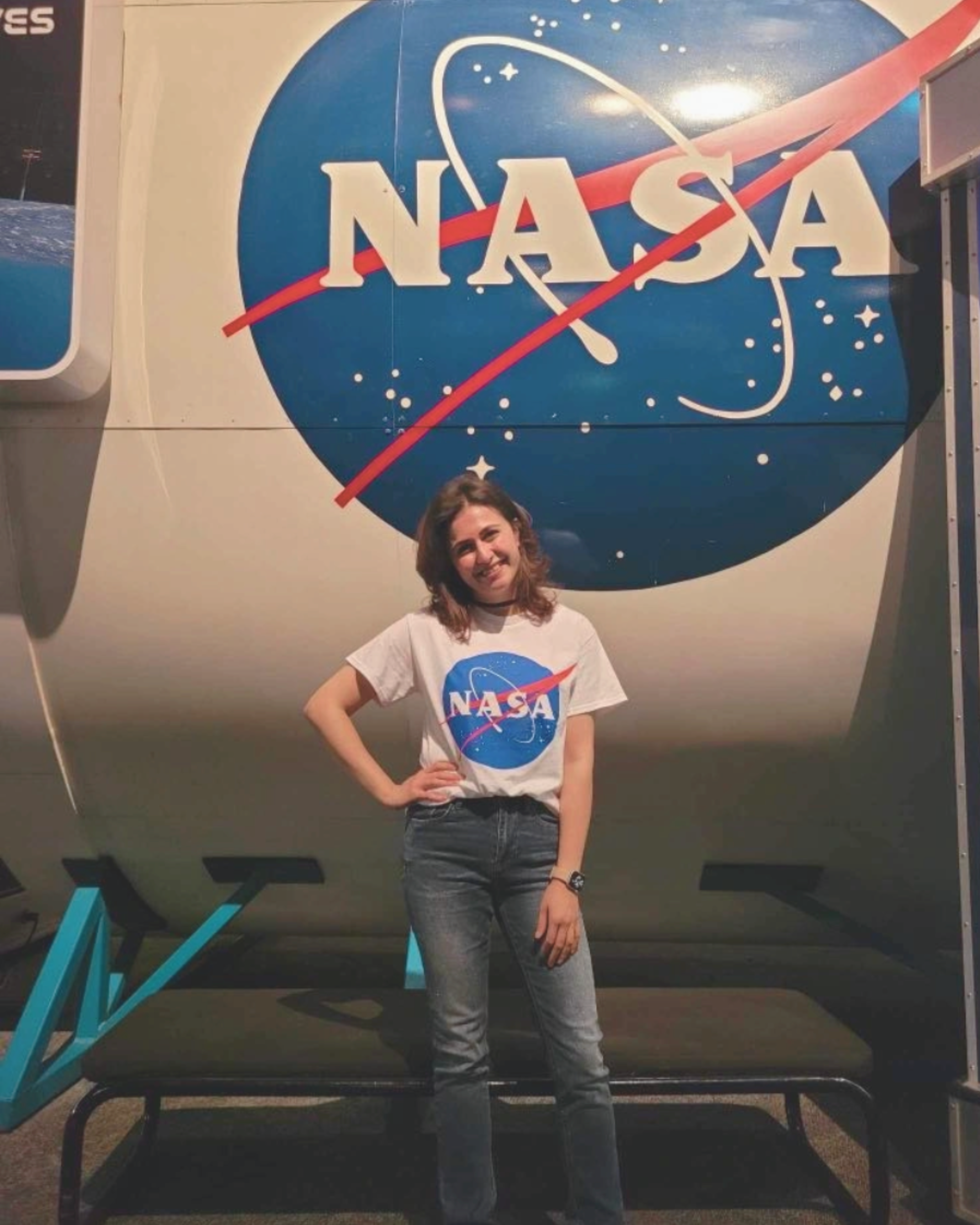
Farah Al Fulfulee at the Johnson Space Center. Photo: Farah Al Fulfulee
Farah Al Fulfulee at the Johnson Space Center. Photo: Farah Al Fulfulee
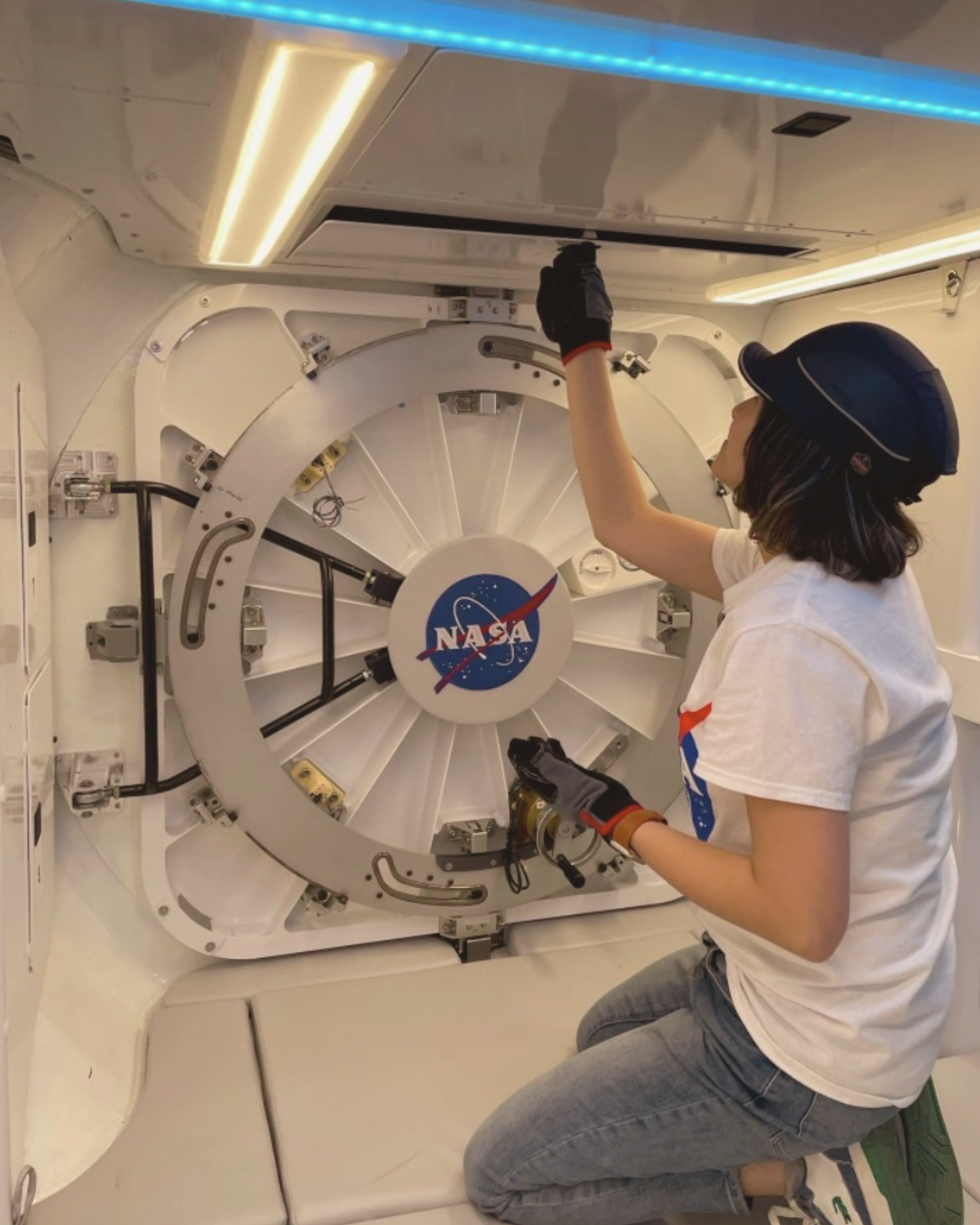
Farah at Johnson Space Center. Photo: Farah Al Fulfulee
Farah at Johnson Space Center. Photo: Farah Al Fulfulee

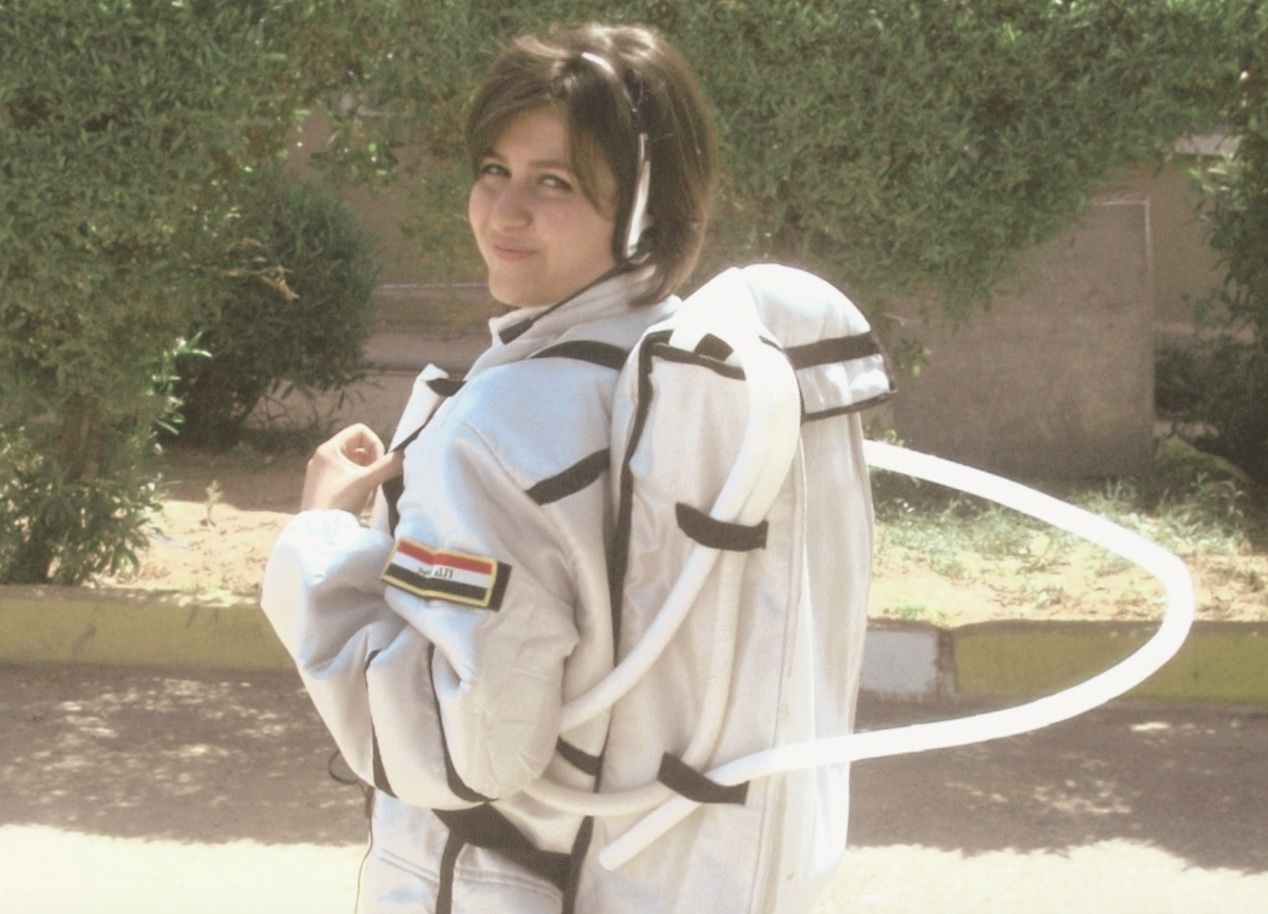
Farah Al Fulfulee at the University of Baghdad Collège of Engineering/ Electronic and Communication Photo: Farah Al Fulfulee
Farah Al Fulfulee at the University of Baghdad Collège of Engineering/ Electronic and Communication Photo: Farah Al Fulfulee
"When you get to space, the beauty is all around you"
Dorothy Metcalf-Lindenburger, Retired NASA Astronaut

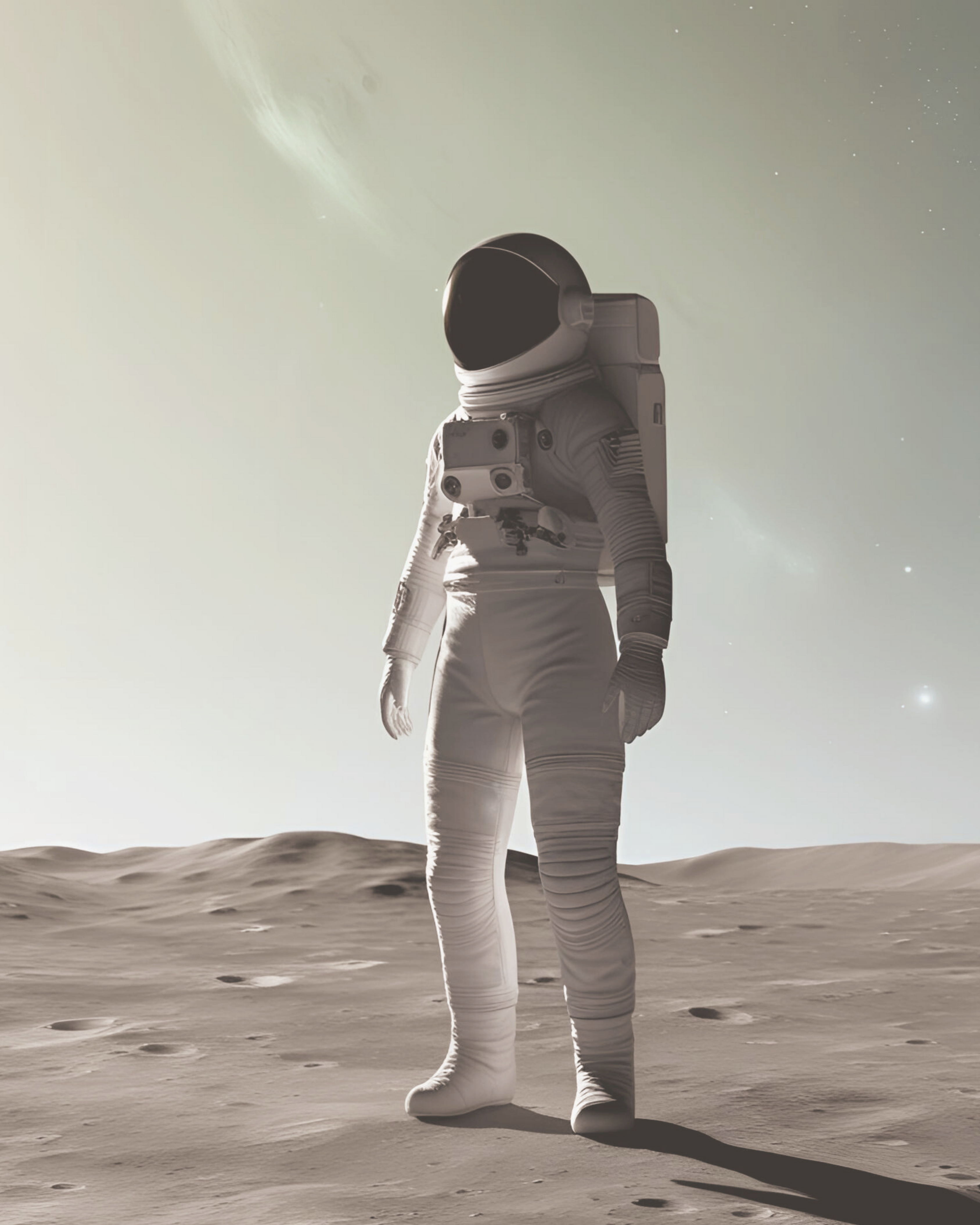
'I was a third grader when I believed women could be astronauts'
Dorothy Metcalf-Lindenburger
From classroom to cosmos, Dorothy Metcalf-Lindenburger’s path to space is a testament to the power of perseverance and passion. A former science teacher, she launched into orbit in April 2010 as part of NASA's STS-131 mission to the International Space Station (ISS) in April 2010, spending over 15 days in space.
The mission made headlines for setting a new record – the most women in space at one time. Yet Metcalf-Lindenburger’s impact extends far beyond that historic flight, as she continues to inspire future generations through her dedication to science education and outreach.
Metcalf-Lindenburger on witnessing space for the first time.
Her achievements have been recognised with several awards, including being an inaugural inductee into the Space Camp Hall of Fame in 2007.

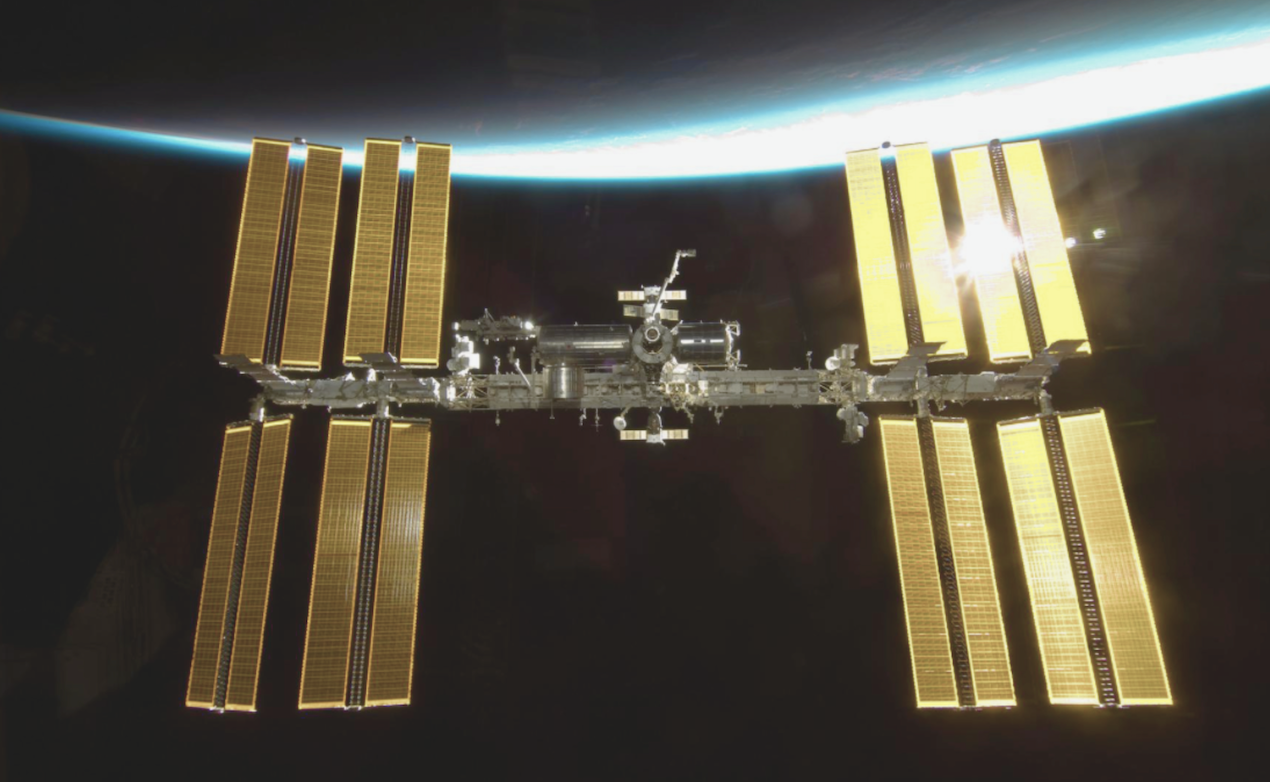
The International Space Station orbits Earth every 90 minutes, serving as a unique laboratory for scientific research in microgravity. Photo: NASA
The International Space Station orbits Earth every 90 minutes, serving as a unique laboratory for scientific research in microgravity. Photo: NASA
Inspired by her parents' deep involvement in mathematics and science, Dottie Metcalf-Lindenburger's journey to becoming an astronaut began in her childhood. Her parents frequently took her and her sister to museums and planetariums, fostering a love for space and science.
A pivotal moment in Metcalf-Lindenburger’s early life came in 1983, when, as a third-grader, she watched Sally Ride become the first American woman in space. “It was a big deal,” she later recalled– an event that planted the seeds of ambition. That same year, the release of The Right Stuff, a film chronicling the early years of America’s space programme, further ignited her fascination with space exploration.
At university, Metcalf-Lindenburger found herself in geology classes where gender balance was the norm – a rarity in many STEM fields at the time. The women in her cohort fostered a spirit of mutual support, creating a collaborative and empowering environment. Though most of her lecturers were male, she recalls being actively encouraged to pursue internships, with additional backing from her family and peers reinforcing her ambitions.
‘’Science can be really challenging and that's why I love it. But you sometimes need to remember why you're doing it and that you can do it.’’ She said.
When Metcalf-Lindenburger began her career at NASA, she noticed lingering traces of an earlier era – one where men had long dominated the space sector.
Dorothy Metcalf-Lindenburger on the gendered design of space suits.
“I wouldn’t say anyone at the time was working against women,” Metcalf-Lindenburger reflected. “And I don’t even think it was intentional when it was done – it’s just a relic of the past.”
As a working mother during her time at NASA, Metcalf-Lindenburger spoke candidly about the quiet but vital support she received from other women in the field. Many would discreetly pull her aside to offer practical advice – from where to find private spaces to breastfeed or pump, to how to navigate the demands of motherhood alongside a high-pressure career.
''Every year we see the hiring of women in proportion to what we represent in society, it's getting closer and closer to 50%''
Metcalf-Lindenburger is optimistic about the increasing recognition of Diversity, Equity, and Inclusion (DEI) within the industry. She emphasised the importance of having a team with a wide range of experiences and backgrounds to achieve better outcomes within space exploration.
Dorothy Metcalf-Lindenburger on the importance of diversity in the space sector.
During her STS-131 mission to the International Space Station, Metcalf-Lindenburger reflected on the everyday routines shared by the crew. “Our daily routines weren’t all that different between men and women,” she said. “Men might shave in the morning, while women would spend time fixing their hair. I had longer hair at the time, so I’d get that sorted. We all wanted coffee and needed to use the bathroom – though how we did that was a bit different.”
She emphasised the value of having a mixed-gender crew, noting it was essential for “developing new equipment” and improving “day-to-day” operations.
While the US side of the station had made efforts to accommodate female astronauts, she noted that the US side of the station made efforts to accommodate female astronauts, the shared toilet – designed in collaboration with the Russian space agency – was more tailored to men. “There was definitely room for improvement,” she added, “but they did take our feedback seriously.”
Metcalf-Lindenburger, a strong advocate for gender equality in space, said the landscape has shifted significantly since her own school days. “Little girls now in school at the age I was are surrounded by the idea that becoming an astronaut is one of many possibilities for their future,” she said. “The same applies to boys. It’s crucial for all children to see themselves in these roles – and that excites me.”
Metcalf-Lindenburger's advice to girls and women wanting to follow in her footsteps.
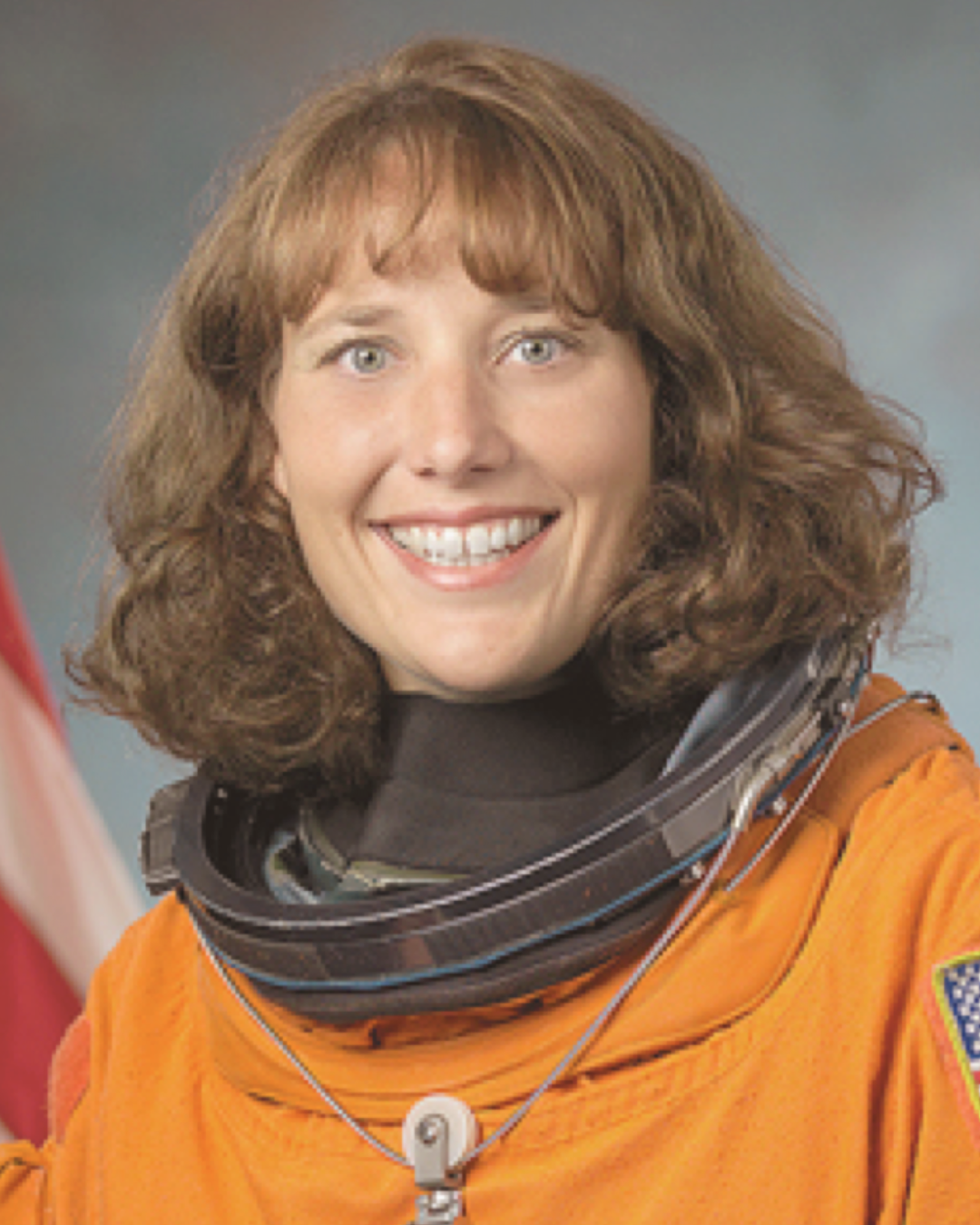
Dorothy Metcalf-Lindenburger became an astronaut after teaching high school science. Photo: NASA
Dorothy Metcalf-Lindenburger became an astronaut after teaching high school science. Photo: NASA
From the classroom to the cosmos – Dorothy Metcalf-Lindenburger became an astronaut after teaching high school science. Photo: NASA
From the classroom to the cosmos – Dorothy Metcalf-Lindenburger became an astronaut after teaching high school science. Photo: NASA
From the classroom to the cosmos – Dorothy Metcalf-Lindenburger became an astronaut after teaching high school science. Photo: NASA
From the classroom to the cosmos – Dorothy Metcalf-Lindenburger became an astronaut after teaching high school science. Photo: NASA
From the classroom to the cosmos – Dorothy Metcalf-Lindenburger became an astronaut after teaching high school science. Photo: NASA
From the classroom to the cosmos – Dorothy Metcalf-Lindenburger became an astronaut after teaching high school science. Photo: NASA
From the classroom to the cosmos – Dorothy Metcalf-Lindenburger became an astronaut after teaching high school science. Photo: NASA
From the classroom to the cosmos – Dorothy Metcalf-Lindenburger became an astronaut after teaching high school science. Photo: NASA
'Sometimes I look around the lecture hall and think – can I count the number of girls here on two hands?'
Rishika Porandla, Astrophysics Student at Princeton University

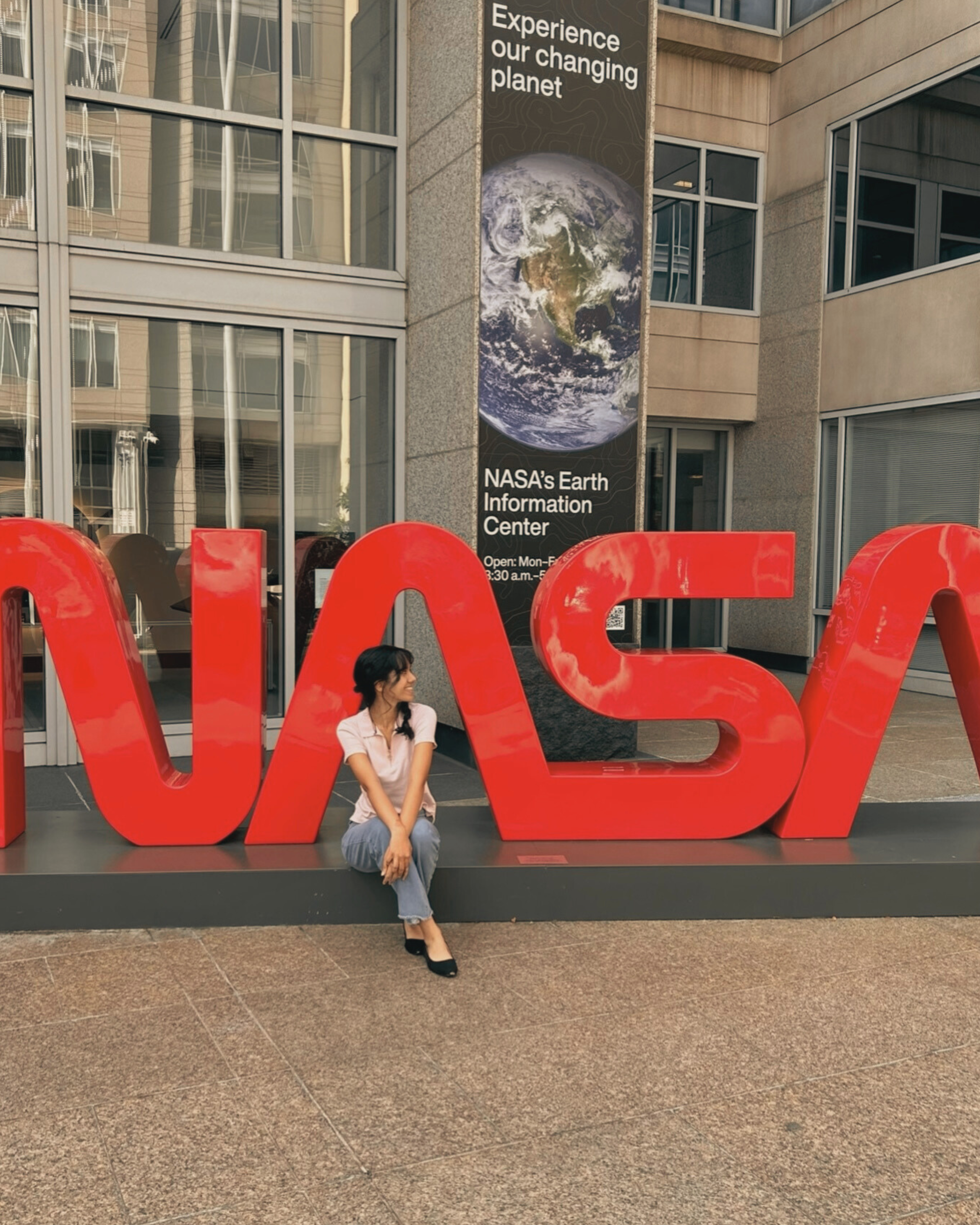
For Rishika Porandla, growing up in the shadow of NASA’s Johnson Space Center in Texas wasn’t just inspiring – it was life-changing, fuelling a passion for space science that would chart the course of her future.
''Coincidentally I was always kind of adjacent or peripheral to a NASA centre, and there's more than 10 NASA centres in the United States,'' said Porandla.
Enthralled by the mysteries of the cosmos, she chose to study physics during her school years — a decision that soon led her to apply for an internship at NASA.
Rishika Porandla on why NASA was her ideal choice.
“When you're a kid and you say, ‘I want to be an astronaut when I grow up,’ most people grow out of that statement”
At the time, Porandla said she felt “sheltered” from the gender inequalities that exist in astrophysics.
“When you're in high school, you don't really attend international conferences or enter academic sectors where some of those inequities become apparent to you,” she explained.
She added: “The internships I applied for were usually predominantly female due to the criteria and a desire for inclusion, which can motivate girls and minority groups to pursue those opportunities.”
It wasn’t until she attended one of the world’s largest Earth and space science conferences that the gender imbalance became clear.
Reflecting on the event, she said: “I remember looking at the programme sheet and the list of keynote speakers whose research was profiled and used to advertise the entire conference – and they were all white males.
“That was my first inkling that people aren’t as represented as they were in the little bubble I was in.”
According to the latest figures from Data USA, the field of astronomy and physics remains overwhelmingly white, with white individuals making up 76.6 per cent of the workforce. Within that group, only 15.4 per cent are women. Asians represent 12.6 per cent of the total, while those identifying as two or more races account for 5.9 per cent.
Although she describes her university experience as largely positive, Porandla said the lack of diversity is most noticeable in certain classes, where she’s often one of only a few women.
“My university really values inclusion, but in one of my astrophysics classes, you can count the number of girls on one hand – it’s something you notice straight away,” she said
She recalled a “very reputable” female lecturer commenting on the gender imbalance in her year group, saying she had “hoped for more” women.
Rishika Porandla on the lack of women in her field.
Looking ahead, Porandla hopes to continue leading pioneering scientific research – whether as a university lecturer or a programme scientist. Her ambition is rooted in collaboration and impact.
“There’s something incredible about building something for a team of such talented people – your deputy science engineer, your specialist – and knowing you’re leading as the principal investigator. That’s the dream,” she said.
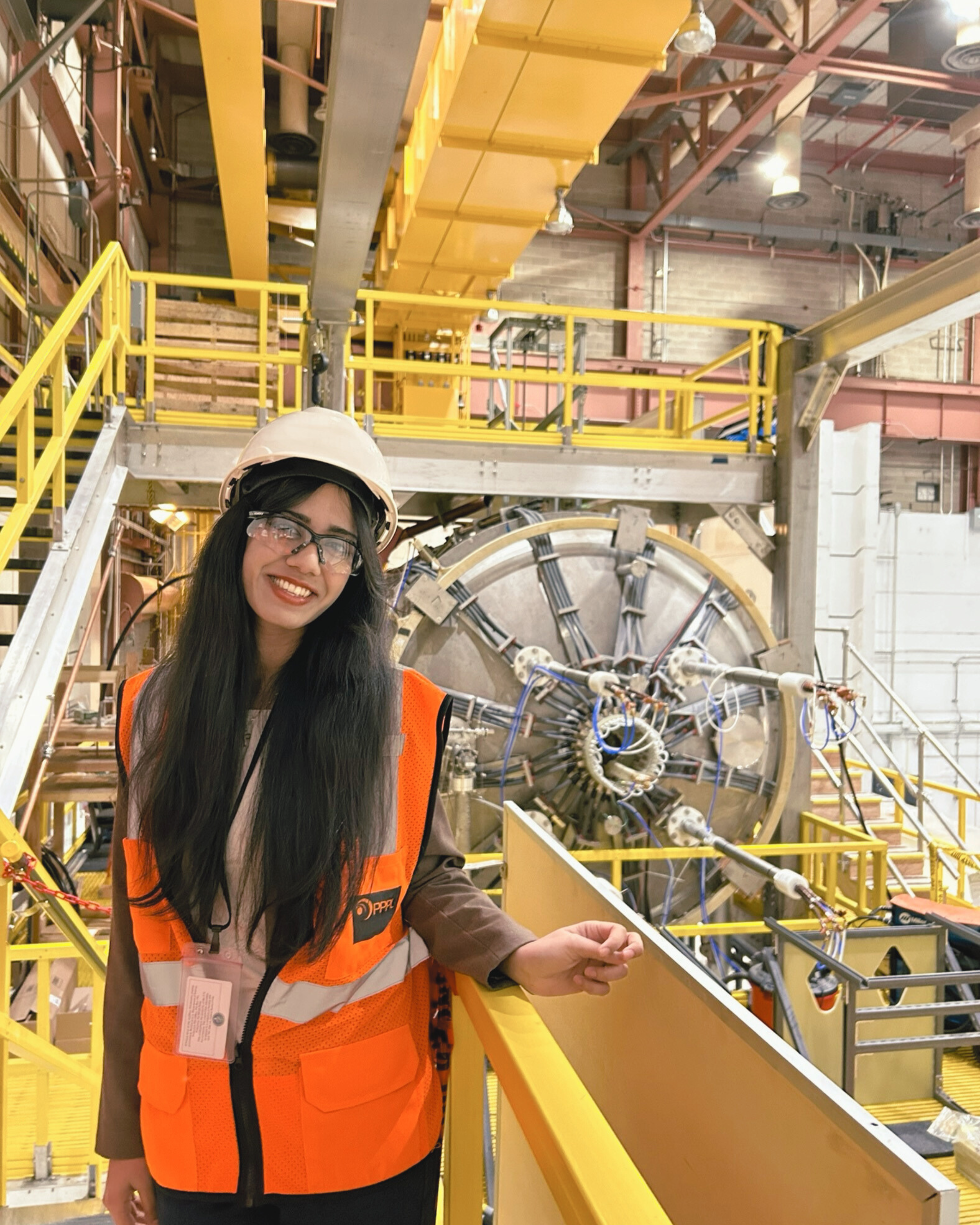
Rishika is part of the Texas Astronomical Society, connecting amateur astronomers across Texas through outreach and public engagement. Photo: Rishika Porandla
Rishika is part of the Texas Astronomical Society, connecting amateur astronomers across Texas through outreach and public engagement. Photo: Rishika Porandla
Rishika is a Space Physics Group researcher at Princeton University. Photo: Rishika Porandla
Rishika is a Space Physics Group researcher at Princeton University. Photo: Rishika Porandla
Rishika is a Space Physics Group researcher at Princeton University. Photo: Rishika Porandla
Rishika is a Space Physics Group researcher at Princeton University. Photo: Rishika Porandla
Rishika is a Space Physics Group researcher at Princeton University. Photo: Rishika Porandla
Rishika is a Space Physics Group researcher at Princeton University. Photo: Rishika Porandla
'We're going to have to push the door down –not wait for them to open it'
Alicia Robinson
As a student, Alicia Robinson had her sights set on a career in criminal defence law, juggling studies with part-time work to make ends meet. But what began as a pursuit of justice in the courtroom took an unexpected turn –one that would lead her to a distinguished 25-year career at NASA. The question is: how does an aspiring lawyer end up shaping astronaut training at one of the world’s leading space agencies?
“I applied to be an administrative assistant in one of the departments at NASA’s Johnson Space Center,” Robinson recalled. “While I was just trying to get through college, I ended up working in the training office.”
Her route into the space sector was anything but typical. “My journey into the space industry is very unconventional,” she said. “I never dreamt that this would be something I would do at all.”
In her role as an administrative assistant, Robinson often found herself observing the training of NASA flight controllers, astronauts, and mission managers for both shuttle and space station operations.
“I would attend meetings with these individuals and think, well, that seems like an interesting career,” she said, reflecting on those early experiences.
At the time, she was still pursuing her ambition of attending law school. But then, an unexpected opportunity presented itself – one that would ultimately steer her in an entirely new direction.
“My boss at the time said, ‘I know you want to go to law school, but we need someone to cover this mission. You have the skillset – you're detail-oriented and have a logistical mindset, which is essential for a training manager.’”
She agreed, thinking it would be a temporary role and a chance to save more money for her legal studies. “To my surprise, I ended up really enjoying the job and found it incredibly fulfilling,” she said.
As NASA’s Astronaut Training Manager, Robinson was tasked with assigning astronauts to missions and coordinating their training schedules. Each mission came with its own set of requirements, and it was her responsibility to ensure that every crew member received the necessary instruction—often across multiple international locations.
“We would send the crew members to Russia, to Japan, to Germany, to Canada – all these places to train,” she explained. “The training manager was responsible for making sure that all of the training objectives were met, so that at the end of the training flow, you could confirm that the astronaut crew was ready to fly.”
Even though all of her fellow International Training Managers at NASA were women, Alicia Robinson couldn’t help but notice a different imbalance – racial inequality.
“There were only five International Training Managers in my office, and all of them were women,” Robinson said. “I didn’t see anyone that looked like me doing the job I did at NASA.”
While gender representation had made some strides, Robinson pointed out that African Americans remained significantly underrepresented in aerospace and STEM careers. “There are barriers – like unequal access to education, mentorship and funding – that continue to hold people back,” she said.
To address these challenges, NASA has signed a Space Act Agreement with the National Association for the Advancement of Colored People (NAACP) aimed at improving access to STEM opportunities for underrepresented students. The partnership seeks to boost engagement and equity in science, technology, engineering and mathematics education, as well as increase participation in NASA programmes.

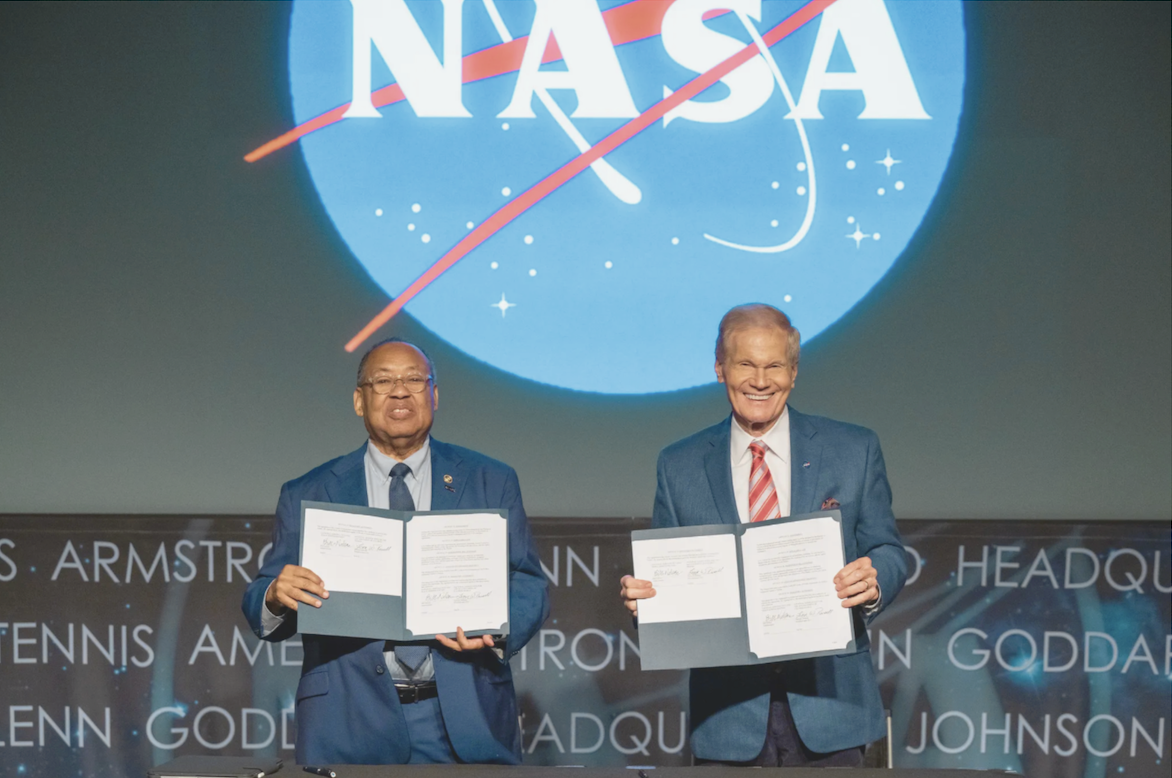
NAACP Chair Leon Russell and NASA Administrator Bill Nelson signed a Space Act Agreement at NASA HQ. Photo: NASA
NAACP Chair Leon Russell and NASA Administrator Bill Nelson signed a Space Act Agreement at NASA HQ. Photo: NASA
“NASA and the NAACP share a longstanding commitment to attracting more diverse students to STEM education and ultimately careers,” said Shahra Lambert, senior advisor for engagement and equity at NASA Headquarters, in a statement published on the agency’s website.
Other organisations such as the National Society of Black Engineers (NSBE) are working to address these challenges by offering scholarships, mentorship and networking opportunities.
Robinson believes that visibility plays a crucial role in inspiring the next generation. “When young people see someone who looks like them in a role they never imagined possible, it changes what they believe they can achieve,” she said.
Through school visits, mentoring schemes and public speaking engagements, she has seen first-hand the impact of representation. “It’s not just about encouraging them to dream big – it’s about showing them that those dreams are within reach.”
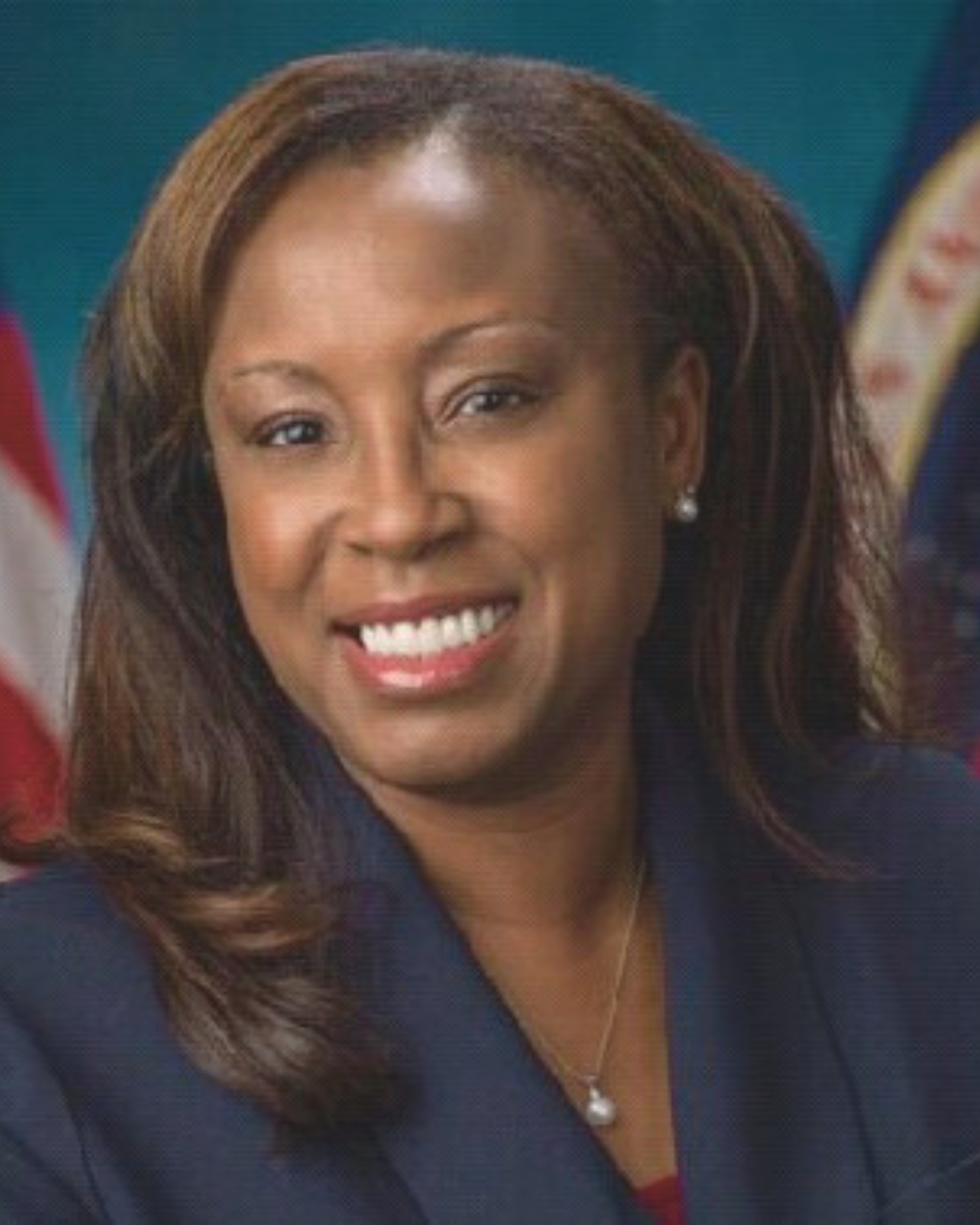
Alicia Robinson set out to study law, but the universe had other plans. Photo: Alicia Robinson
Alicia Robinson set out to study law, but the universe had other plans. Photo: Alicia Robinson
Alicia Robinson former NASA Astronaut Training Manager.
Alicia Robinson former NASA Astronaut Training Manager.
Alicia Robinson former NASA Astronaut Training Manager.
Alicia Robinson former NASA Astronaut Training Manager.
Alicia Robinson former NASA Astronaut Training Manager.
Alicia Robinson former NASA Astronaut Training Manager.
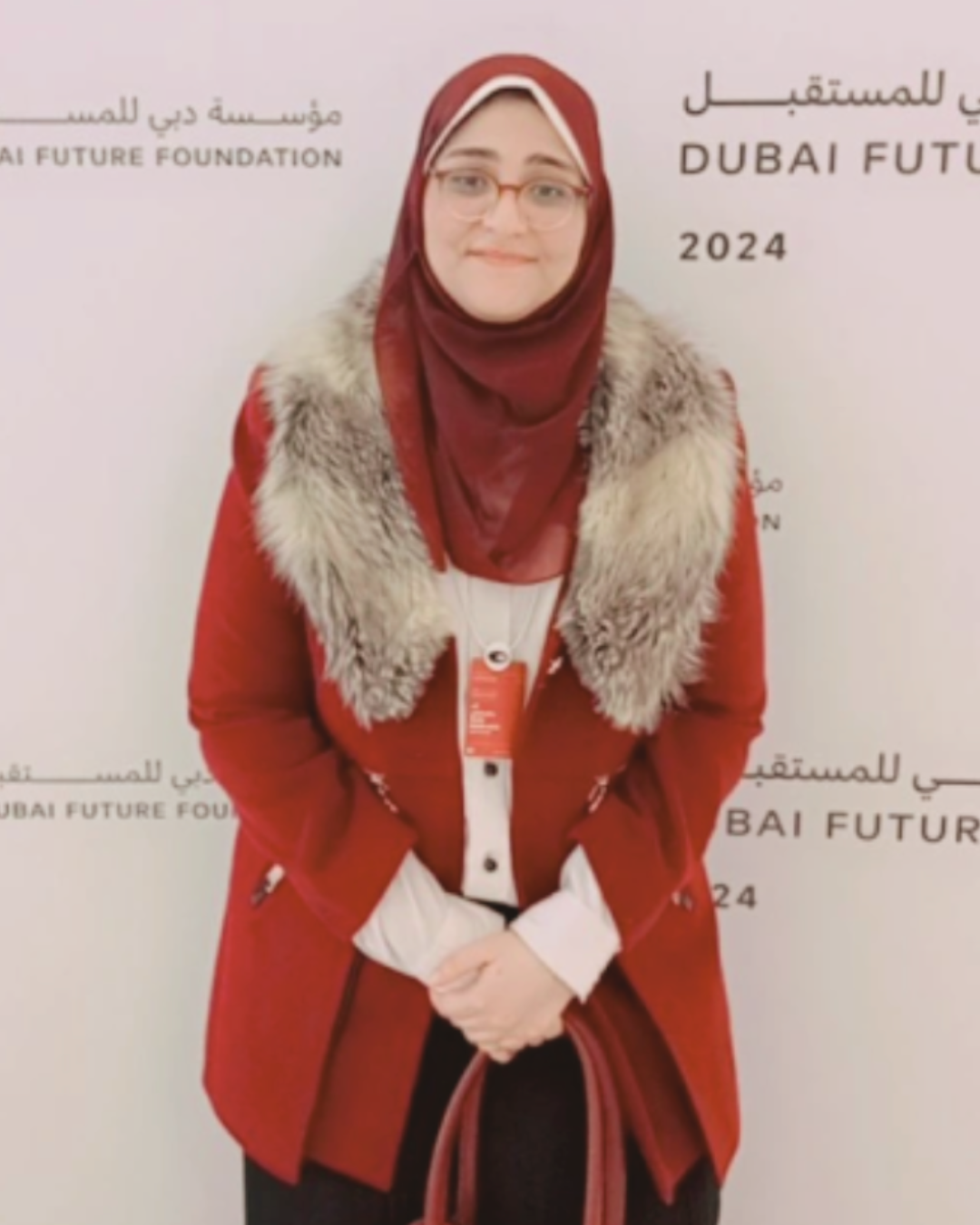
Alaa explores the impact of space and sustainability, working with global experts on urban science projects Photo: Alaa Salah Afifi
Alaa explores the impact of space and sustainability, working with global experts on urban science projects Photo: Alaa Salah Afifi
Alaa dreamt of space as a young girl living in Egypt. Photo: Alaa Salah Afifi
Alaa dreamt of space as a young girl living in Egypt. Photo: Alaa Salah Afifi
Alaa dreamt of space as a young girl living in Egypt. Photo: Alaa Salah Afifi
Alaa dreamt of space as a young girl living in Egypt. Photo: Alaa Salah Afifi
'Every human in this universe, has the right to dare to dream'
Alaa Salah Afifi
The spark that ignited Alaa Salah Afifi’s journey into the cosmos began not in a lab, but in her childhood living room in Egypt. She remembers watching her father, a physics teacher, conduct a simple solar power experiment. To her, it wasn’t just science – it was magic.
“He was like a musician turning dust into light,” she recalled. “I was so curious. I asked him, ‘Why science? Why physics?’ His answer stayed with me forever: ‘Physics is all around us. Inside us and about us. It is light, air, water, and sound. The greatest force that turns on the bulb is the attraction between the negative and the positive.’ That was the moment I knew – I wanted to uncover the mysteries of space.”
Alaa on her career challenges being a woman from Egypt.
Today, Salah Afifi is a STEM teacher in Egypt, a researcher at Astro Tech Hub, and a mentor with Women in Aerospace Europe. Her work spans astrophysics, black hole analysis, and sustainable technologies. But like many women in STEM, her path has been one of persistence – constantly proving herself in a field where women remain underrepresented.
According to the World Economic Forum’s Global Gender Gap Index 2020 – a comparative measure of gender parity across 153 nations – Egypt ranked 134th, having closed just 62.9 per cent of its overall gender gap. The index found disparities between women and men across social, political, economic, and cultural dimensions.
Despite these challenges, women in Egypt are achieving near parity with men in STEM education. A 2021 study by the British Council revealed that women and men graduate in almost equal numbers in science, technology, engineering, and mathematics degrees. However, this progress in education has not translated into the workplace. Far fewer women go on to pursue careers in these fields, pointing to persistent structural and societal barriers that hinder their professional advancement.
Salah Afifi reflected on her own experiences:“People questioned my abilities simply because of my gender.
“Another challenge was being from Egypt – I had to actively seek international collaborations and work harder to connect with experts around the world. But those challenges only strengthened my determination to succeed.”
"My dream is to leave a lasting impact, inspiring other women to follow their dreams"
Salah Afifi has witnessed instances where women’s technical contributions were overlooked, even when they were more substantial than those of their male counterparts. Still, she believes progress is being made. “Today, women can achieve more by asserting themselves and letting their work speak for itself,” she said.
Now a mentor for young women in STEM, Salah Afifi helps others navigate the barriers she once faced. She’s optimistic about the future of women in the space industry, noting that generational shifts are opening new doors.
“In the past, women were typically seen in roles like teachers or doctors. Becoming an astronaut felt like a distant dream,” she explained. “Today, that dream is becoming a reality, with many women now serving as astronauts.”
NASA's 1997 STS-94 mission, piloted by Susan Kilrain


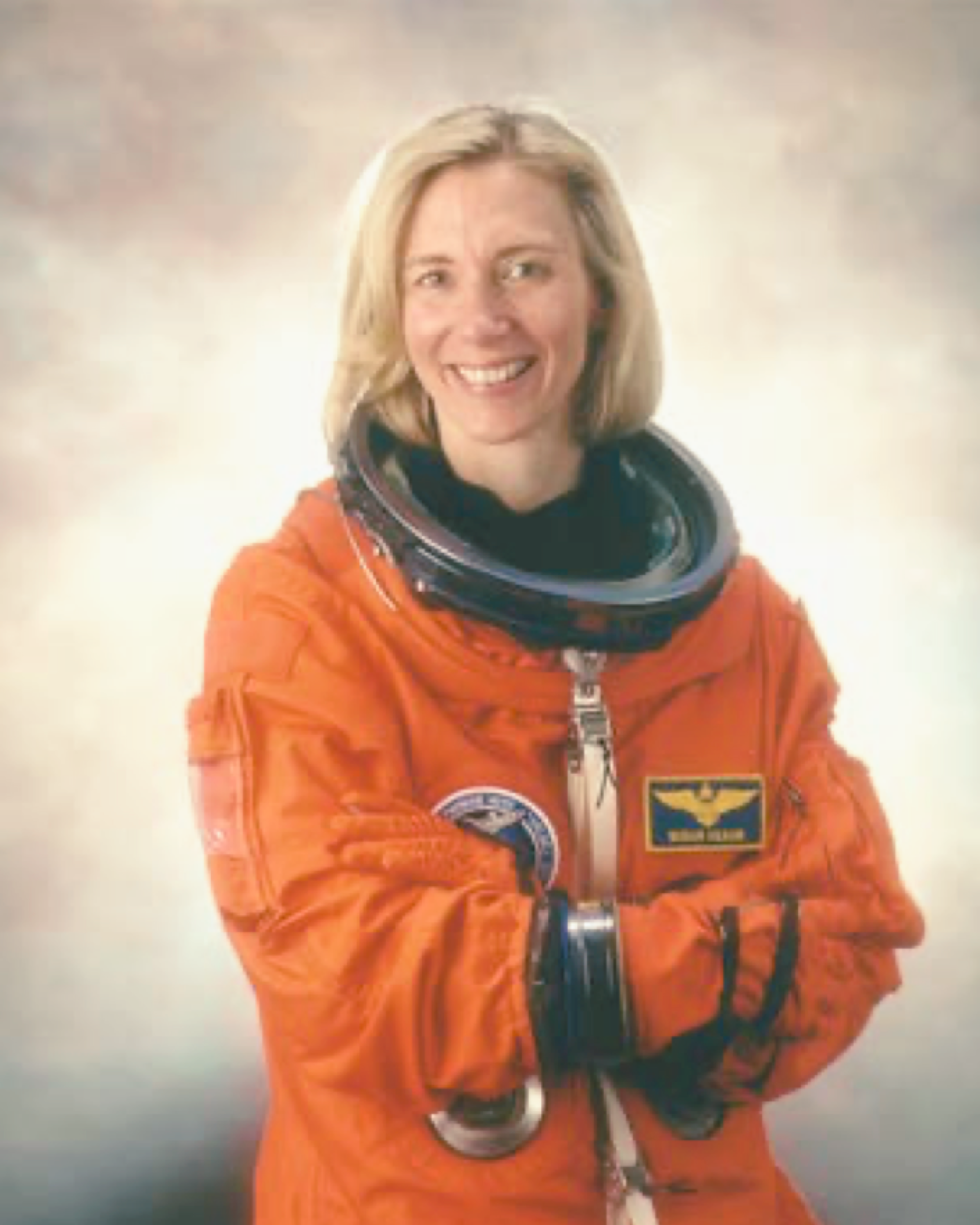
A veteran of two missions, Susan Kilrain has spent more than 471 hours in space. Photo: NASA
A veteran of two missions, Susan Kilrain has spent more than 471 hours in space. Photo: NASA
Susan Kilrain, former NASA Astronaut. Photo: NASA
Susan Kilrain, former NASA Astronaut. Photo: NASA
Susan Kilrain, former NASA Astronaut. Photo: NASA
Susan Kilrain, former NASA Astronaut. Photo: NASA
Susan Kilrain, former NASA Astronaut. Photo: NASA
Susan Kilrain, former NASA Astronaut. Photo: NASA
'If I only inspired one girl to go out and achieve something daring, then I feel like I've done my part'
Susan Kilrain
In 1997, Susan Kilrain became one of only three women to pilot a NASA space shuttle, marking a milestone in the history of American spaceflight. Her first mission, STS-83, was cut short due to a critical systems failure. Undeterred, she returned to space just three months later on STS-94, spending sixteen days conducting scientific research in orbit.
A graduate of the U.S. Naval Test Pilot School, Kilrain brought with her more than 3,000 flight hours across over 30 aircraft types – credentials that placed her among the most experienced pilots in the astronaut corps.

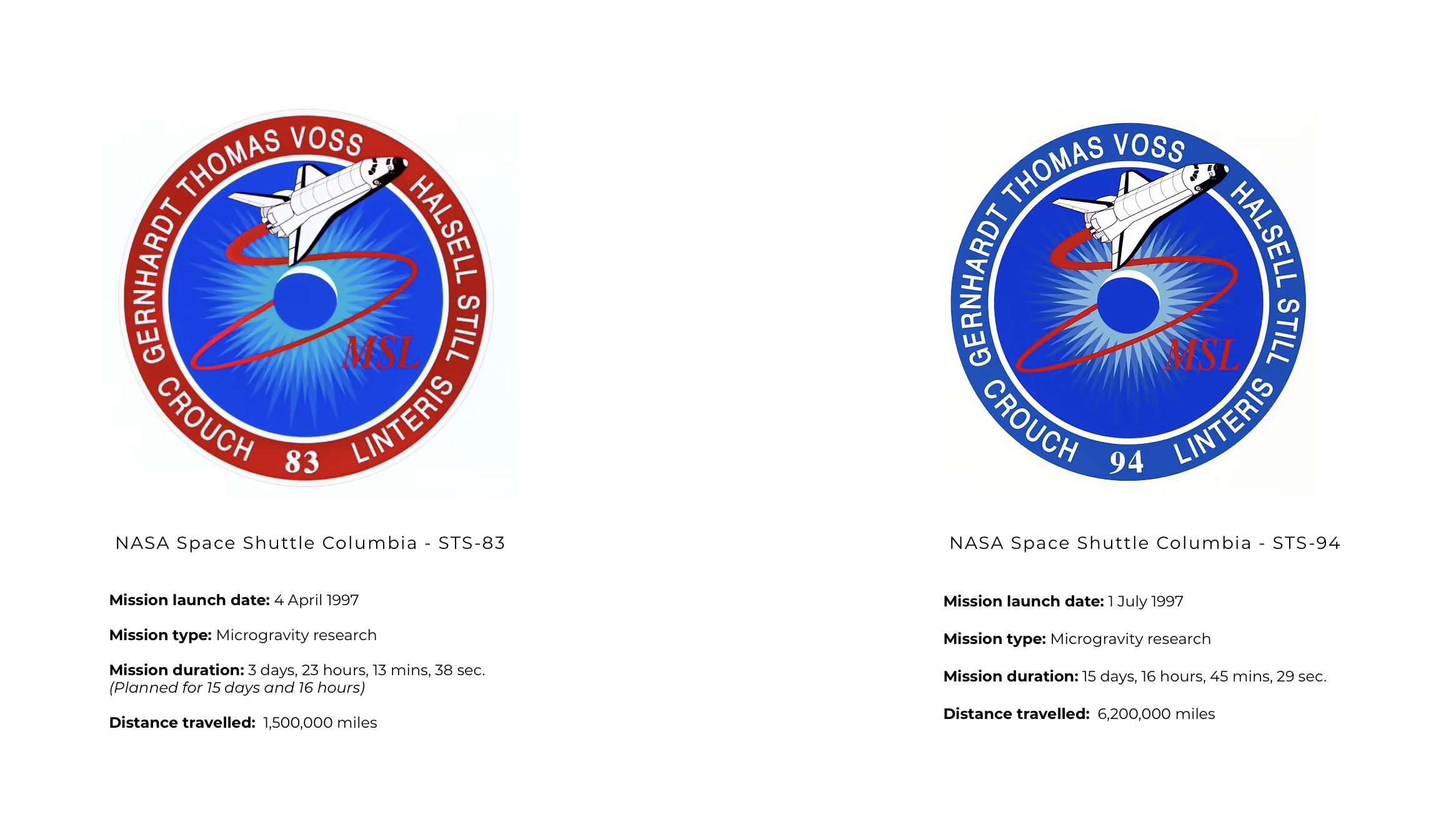
Kilrain logged over 471 hours in space across two shuttle missions in 1997. Photo: NASA
Kilrain logged over 471 hours in space across two shuttle missions in 1997. Photo: NASA
When Kilrain first saw Earth from space, she was struck not by its vastness, but by its vulnerability.
Kilrain on observing Earth from space.
“I was struck by how fragile our planet looked,” she said. “You can’t look out at the horizon and see how thin the atmosphere is – and that atmosphere is all that’s keeping humanity alive – without appreciating just how delicate it is.”
She described the moment as a powerful realisation, one that has stayed with her ever since. “We need to do everything we can – and by ‘we,’ I mean every person on the planet – to protect that atmosphere,” she said.
There's No Place Like Home. Video: NASA
Kilrain grew up in an era when female astronauts were virtually nonexistent. “There weren’t any women astronauts, and girls were told they couldn’t pursue such careers,” she recalled. Encouraged by her father’s belief that she could achieve anything, it wasn’t until university that she became fully aware of the gender-based limitations still in place.
While her path into NASA was relatively smooth, Kilrain said the real challenge lay in entering the military – a critical step toward becoming an astronaut. Determined not to let gender define her trajectory, she remained focused on her goal.
“Some might call it stubbornness,” she said. “But I always saw a way forward. Even when the path wasn’t clear, if the door was even slightly open, I kept pushing.”
Kilrain on her early realisation about astronauts.
When she arrived at NASA, Kilrain was pleasantly surprised. Despite her expectations, gender was rarely a factor in how she was treated.
''NASA was a breath of fresh air and was completely open to women by the time I got there''
Kilrain on on NASA’s increased inclusivity when she joined the agency.
“The only ones who highlighted the fact that I was a woman were the media – NASA never did,” she said. “So, interviews aside, I just felt like one of the other young pilots flying the first flight.”
Within the agency, she found a culture focused on performance and professionalism. She reflected: “At NASA, it was about capability. I was treated like any other pilot.”
Kilrain on the small but memorable difference between male and female astronauts.
Susan Kilrain has observed progress for women in aerospace over the course of her career, but notes that recent policy changes in the United States may be affecting those efforts.
In early 2025, an executive order signed by President Donald Trump directed federal agencies to roll back Diversity, Equity, Inclusion, and Accessibility (DEIA) programmes. NASA, among others, has begun phasing out such initiatives, prompting debate over the long-term impact on representation in science and engineering fields.
“We’re experiencing a bit of a setback,” Kilrain said. “I have mixed feelings about it.”
With her daughter currently in Navy flight training, Kilrain had hoped the environment would be different for the next generation. “I was hoping she wouldn’t have to deal with the same rhetoric I did,” she added. “But it feels like we’ve taken a step backwards.”
Kilrain has stressed the ongoing need to encourage girls to pursue careers in STEM and the space sector.
“We need to support them through secondary school,” she said, “because at some point, it becomes ‘uncool’ for girls to be smart.”
Kilrain also highlighted the subtle but persistent gender biases that continue to affect women in technical fields. “You still find women being assigned tasks that are more secretarial in nature, rather than engineering roles, and that can be very discouraging,” she added.
Kilrain on the importance of enjoying the journey.
In addition to her work as a speaker, Kilrain has authored a children’s book, An Unlikely Astronaut, inspired by her own journey. The book aims to spark curiosity and ambition in young readers, encouraging them to dream big –especially those who may not see themselves represented in the world of space exploration.
While acknowledging that the path to space can be daunting – particularly for women– Kilrain emphasised the importance of perseverance. “The odds are often stacked against us,” she admitted, “but it’s vital not to give up.”
With special thanks to
Susan Kilrain
Laura Dao
Farah Al Fulfulee
Dorothy Metcalf-Lindenburger
Rishika Porandla
Alicia Robinson
Alaa Salah Afifi
 Built with Shorthand